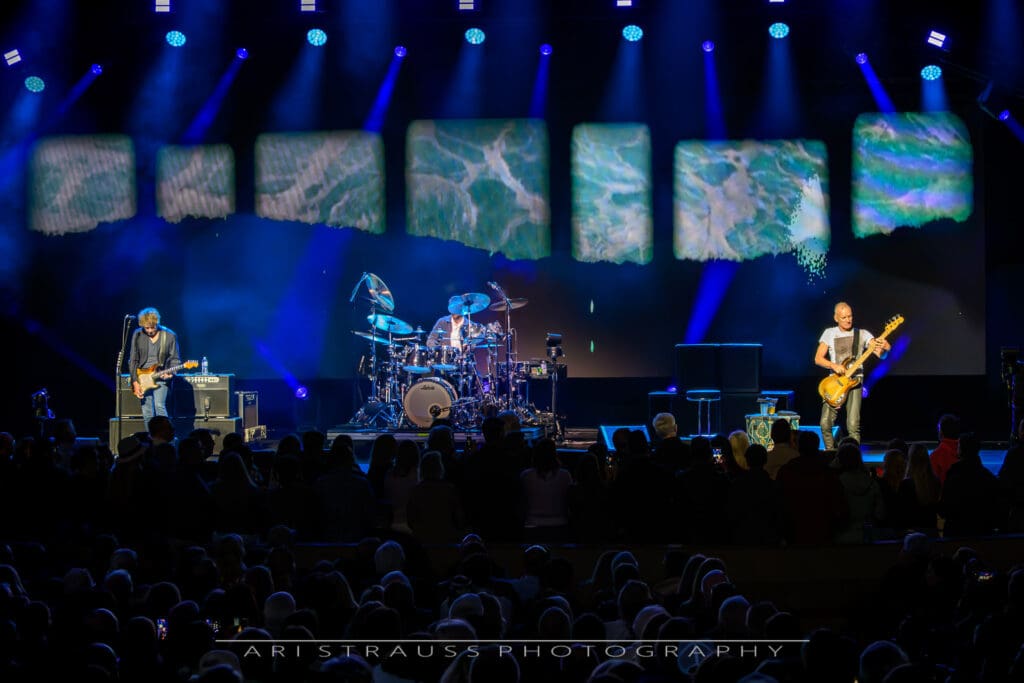
Sting has spent decades proving that restraint can hit harder than excess. On the first night of a three-night stand at Wolf Trap, he arrived with Sting 3.0, a tour built around the radical premise that a catalog full of sleek studio textures, jazz inflections, pop hooks, and global rhythms could be stripped down to the bones of a three-piece band.
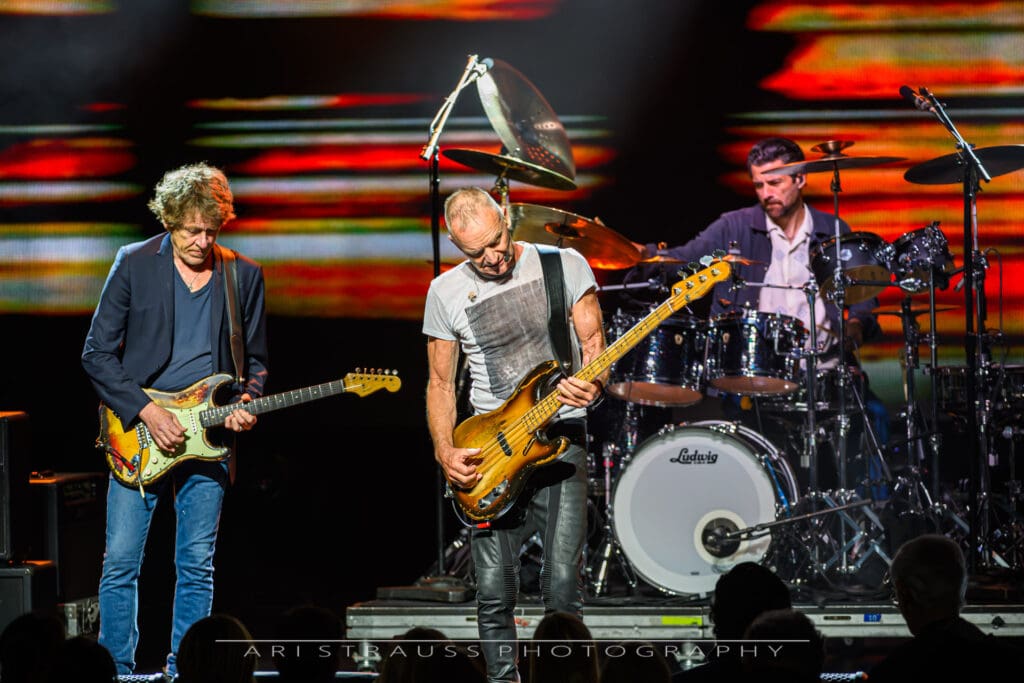
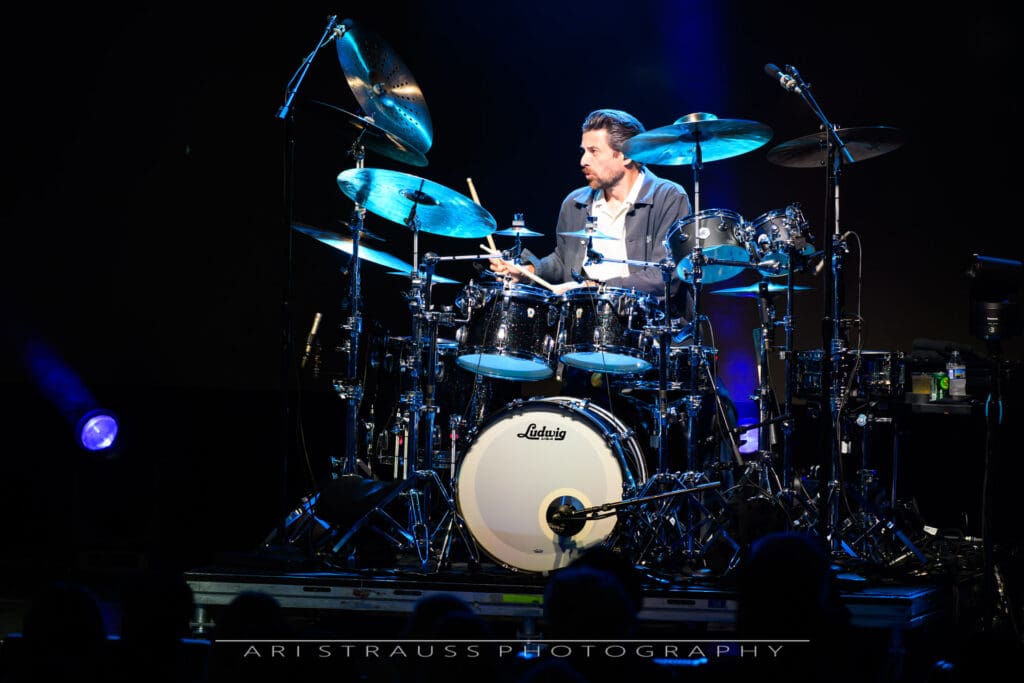
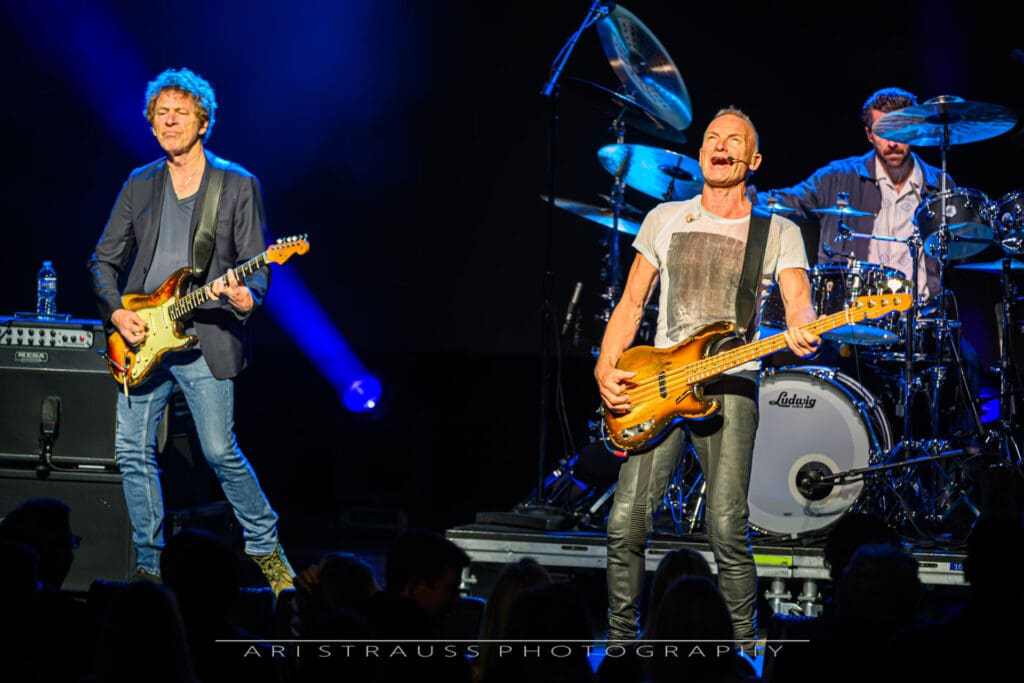
On paper, the setup was simple: Sting on vocals and bass, longtime collaborator Dominic Miller on guitar, and Chris Maas, a dynamic session musician well-known for his prior work with Mumford & Sons and Maggie Rogers on drums. In practice, it was less a reduction than a recalibration.
The name “Sting 3.0” is literal enough, a nod to the three musicians on stage, but it also works as a kind of software update for the catalog. This was not a nostalgia exercise, even though the setlist leaned heavily on familiar material from both The Police and Sting’s solo career. Instead, the May 21 show treated the songs as durable frameworks, capable of being reloaded into a leaner, rawer operating system. The spiritual connection to The Police was obvious: bass, guitar, drums, voice, and negative space doing the work usually assigned to keyboards, backing singers, and studio architecture.
That minimalist philosophy shaped the evening from the opening “Message in a Bottle,” which immediately established the core tension of the show: How much sound can three musicians make without cluttering the room? The answer, repeatedly, was plenty. “I Wrote Your Name (Upon My Heart)” followed as a newer piece that fit comfortably inside the stripped-down format, before “If I Ever Lose My Faith in You” and “Englishman in New York” reminded the audience how elastic Sting’s writing can be when separated from its original arrangements.
Stream The Police Greatest Hits album from Spotify:
The setlist appeared tightly engineered rather than casually shuffled. That precision mattered. Without backing tracks, keyboards, or extra instrumentalists to thicken the mix, transitions had to be clean and arrangements had to be disciplined. Songs like “Every Little Thing She Does Is Magic,” “Wrapped Around Your Finger,” “Driven to Tears,” “Can’t Stand Losing You,” “Walking on the Moon,” “So Lonely,” “King of Pain,” and “Every Breath You Take” all carried the DNA of The Police, but they were not presented as museum pieces. They were retooled around groove, space, and rhythmic clarity.
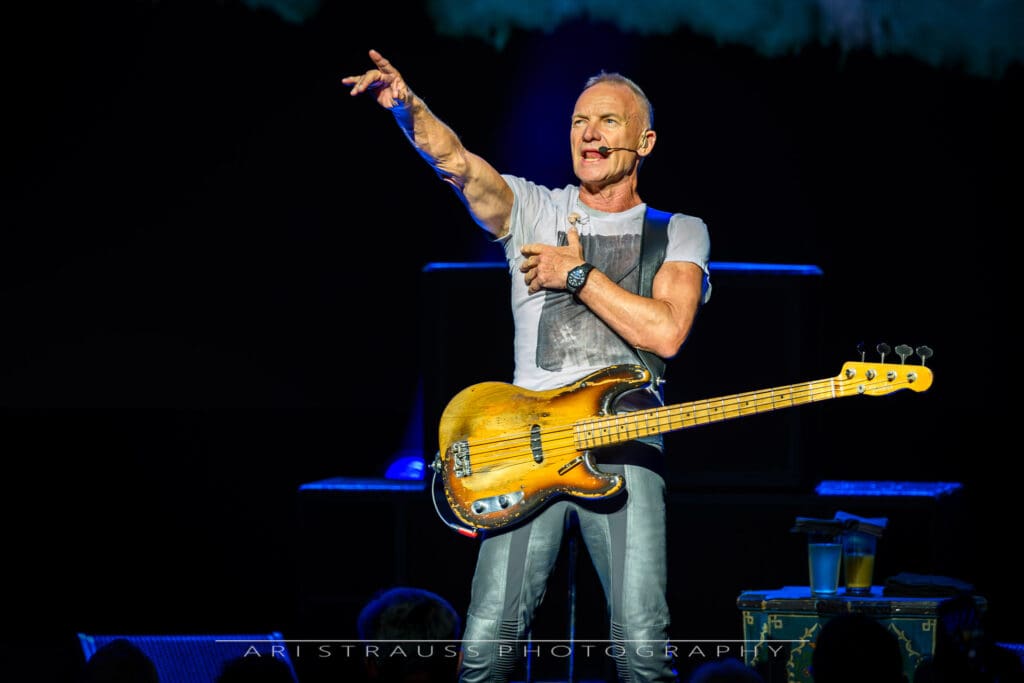
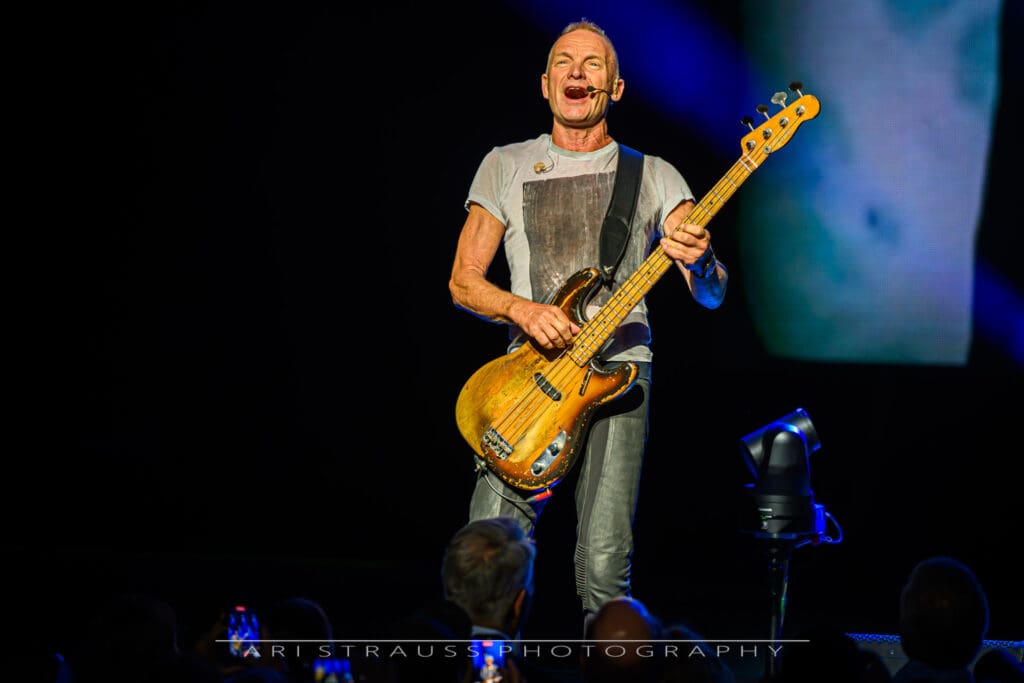
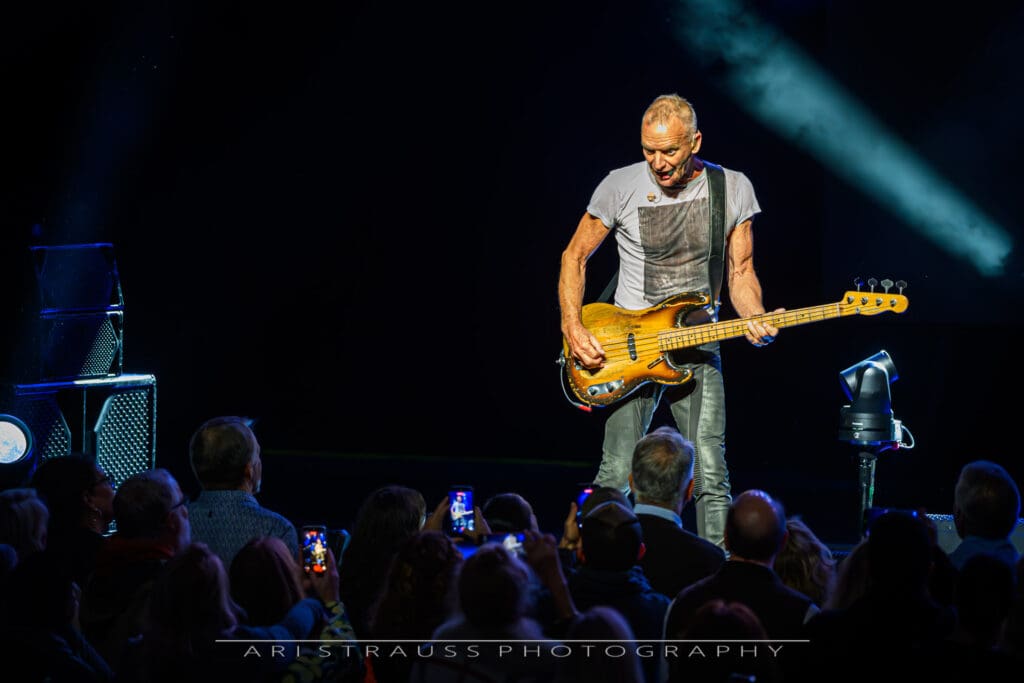
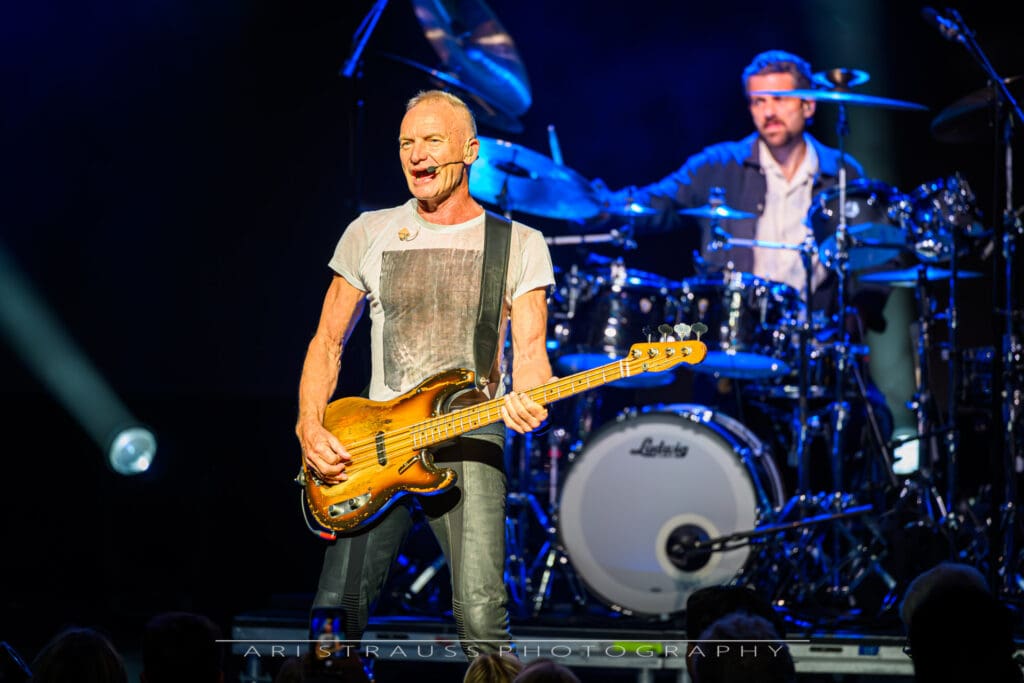
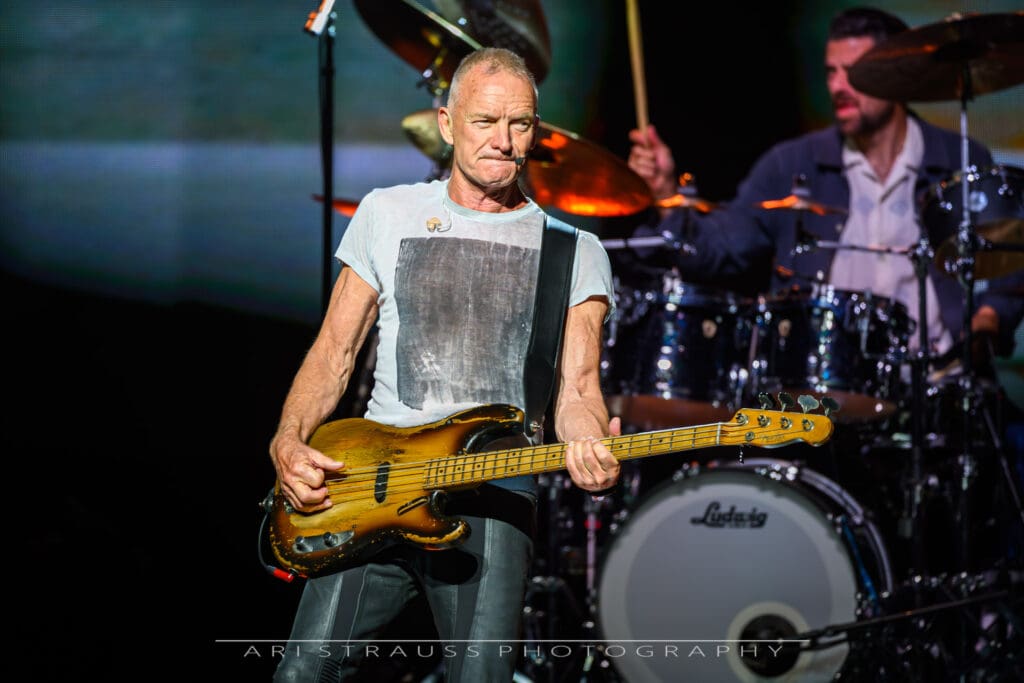
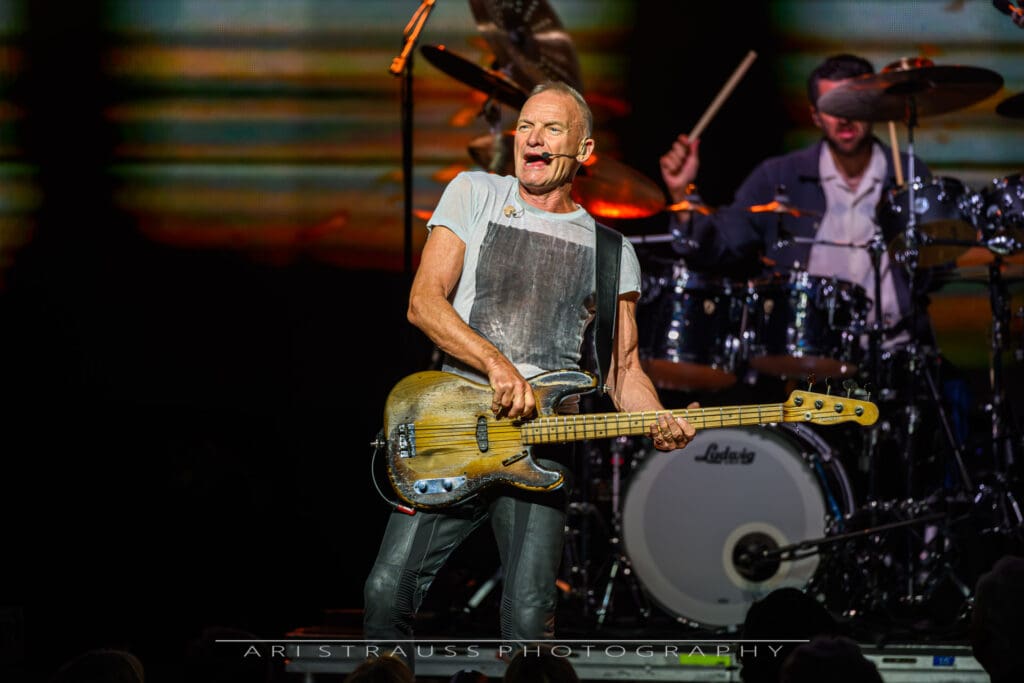
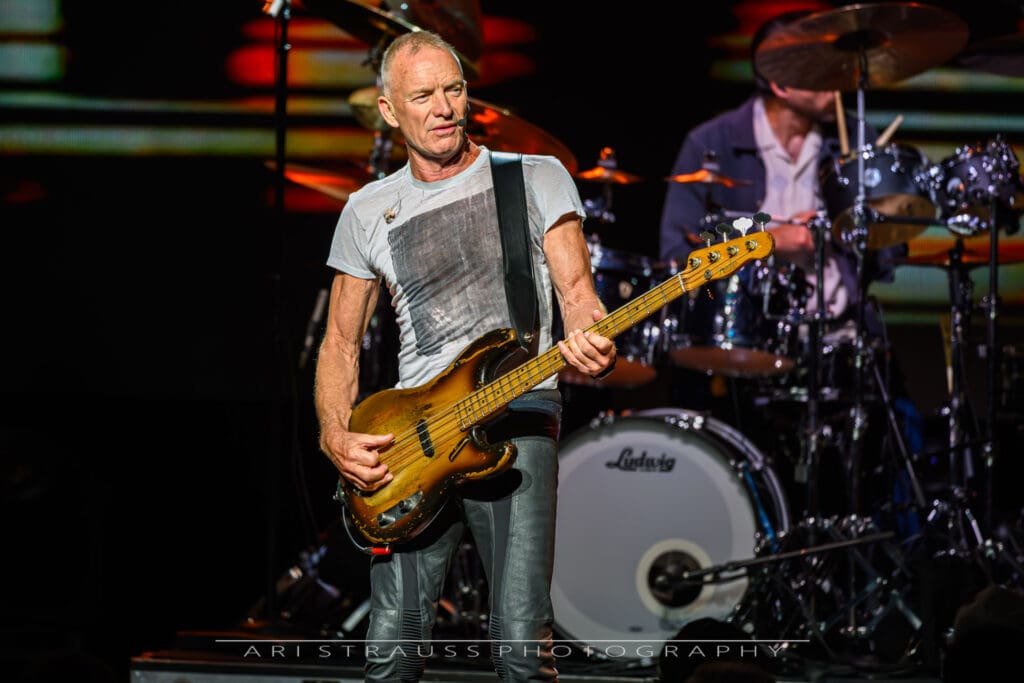
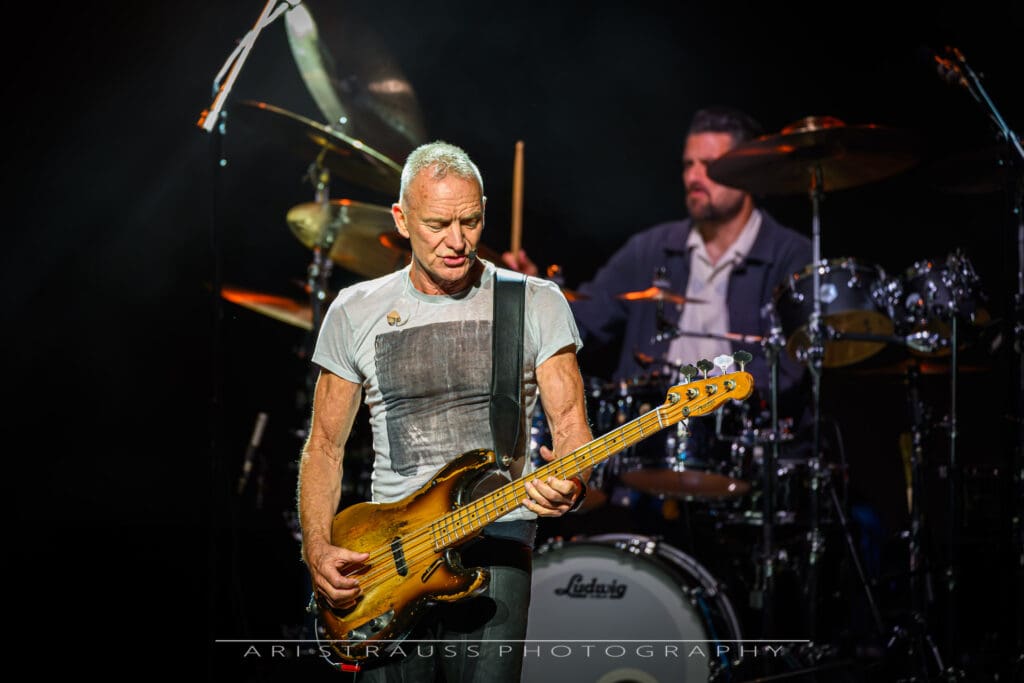
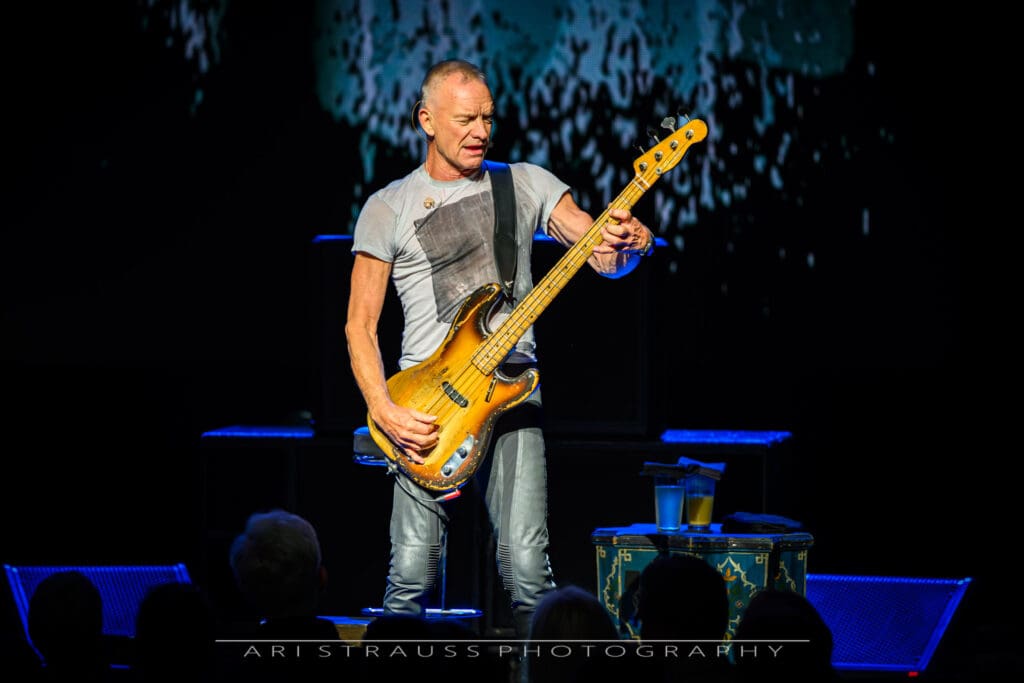
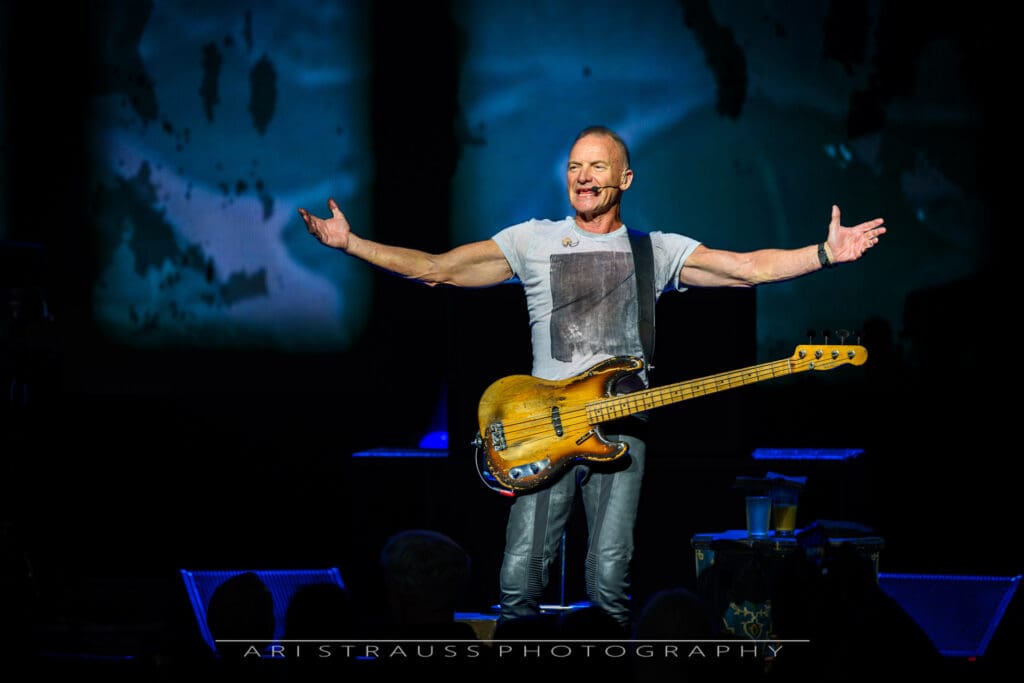
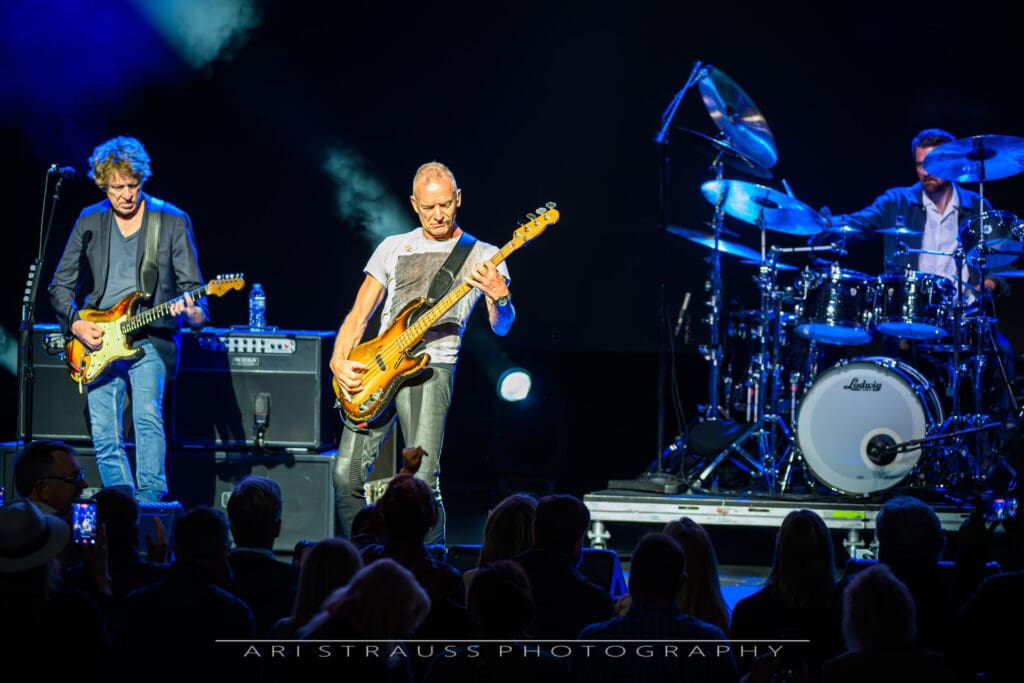
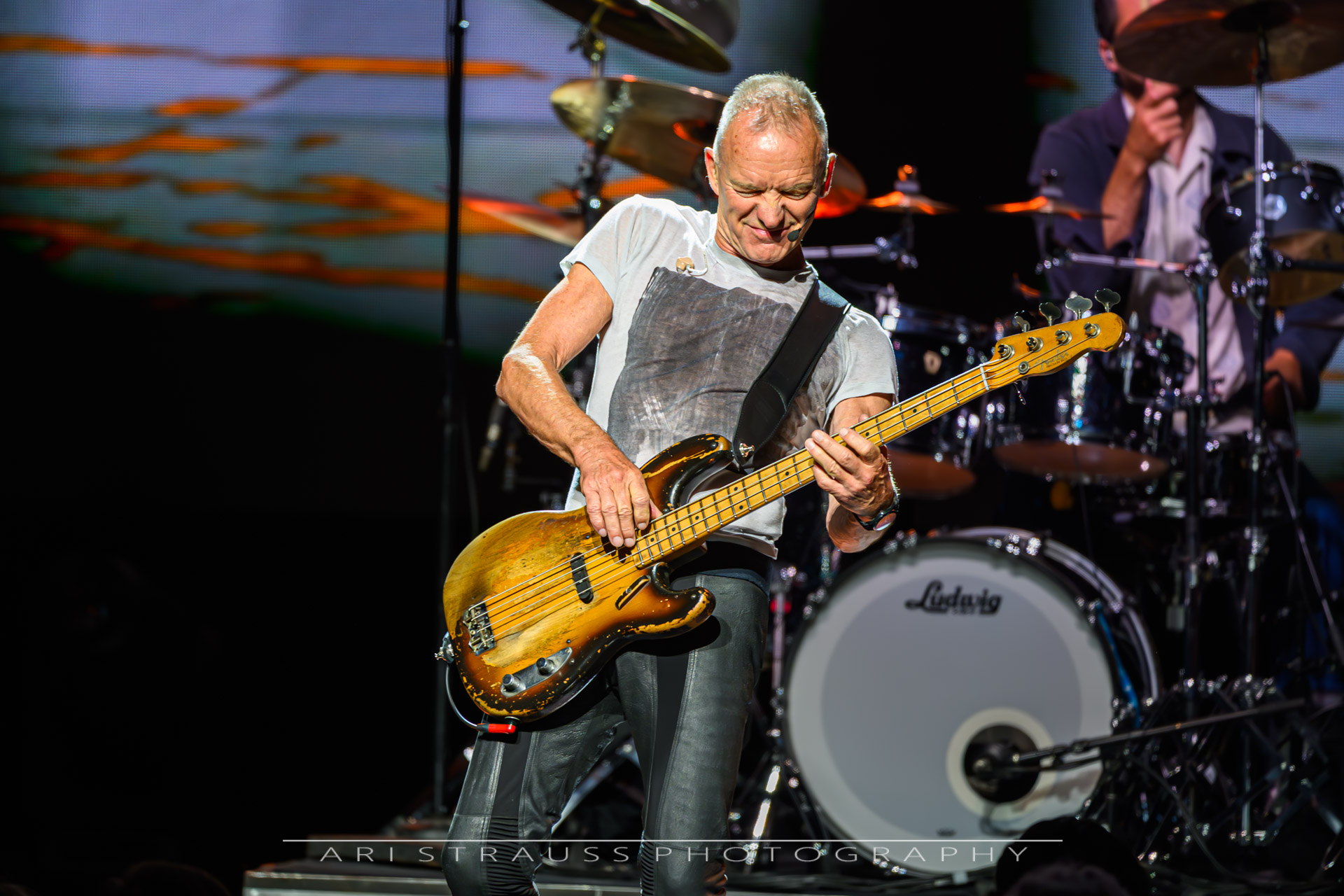
Much of that clarity began with Sting’s bass playing, and his stage posture alone told part of the story. Look closely and the mechanics become revealing: Sting rarely uses a pick anymore, nor does he rely on the standard two-finger alternating pluck common to many electric bassists. Instead, he attacks the strings primarily with a downward thumb stroke, occasionally pulling upward with his index finger. By angling the bass neck sharply upward, he drops the body of the instrument closer to his hip, allowing his right arm to hang naturally straight down. That puts his thumb almost parallel to the strings, giving each downstroke a heavy, rounded force that suits the reggae-influenced pulse running through so much of his catalog.
The posture also connects directly to Sting’s musical origins. Before he was associated with a Fender Precision bass, Sting was a jazz fanatic who played the upright double bass, an instrument that teaches the body to approach the strings vertically rather than horizontally. When he pulls the neck of his electric bass toward that near-upright position, especially during grooves like “Roxanne,” it reads less like a stage pose than old muscle memory asserting itself. The angle keeps both wrists straight, reducing tension in his hands and forearms while preventing the hunched posture that can compress a singer’s chest. For a frontman who must anchor the rhythm and deliver powerhouse vocals at the same time, it is a master class in physical efficiency: fatter tone, cleaner mechanics, and an open vocal posture under the Wolf Trap stage lights.
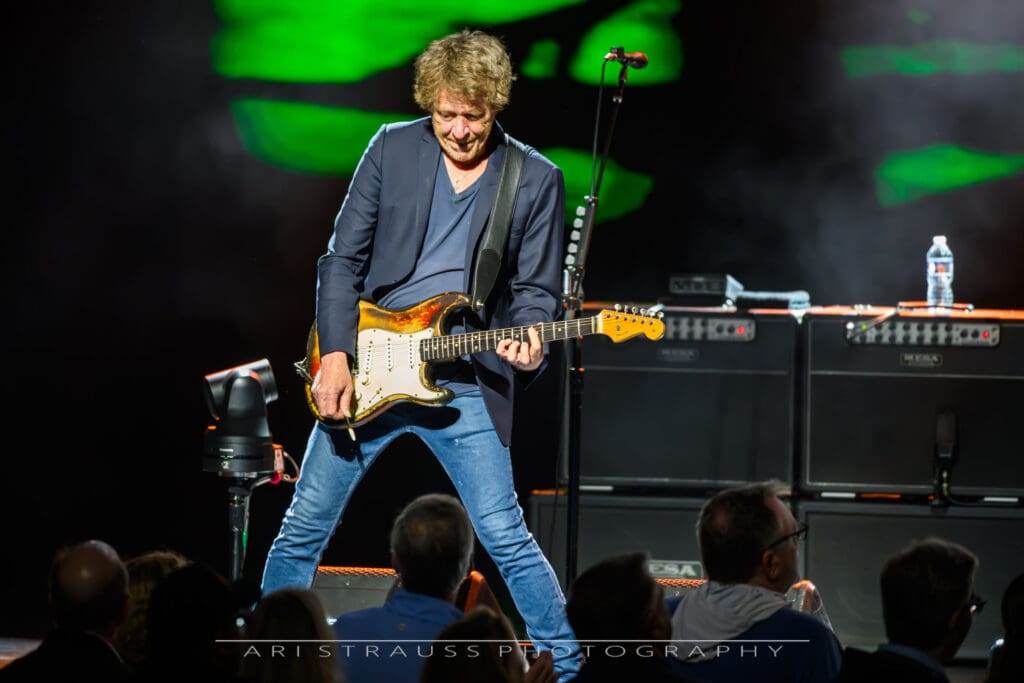
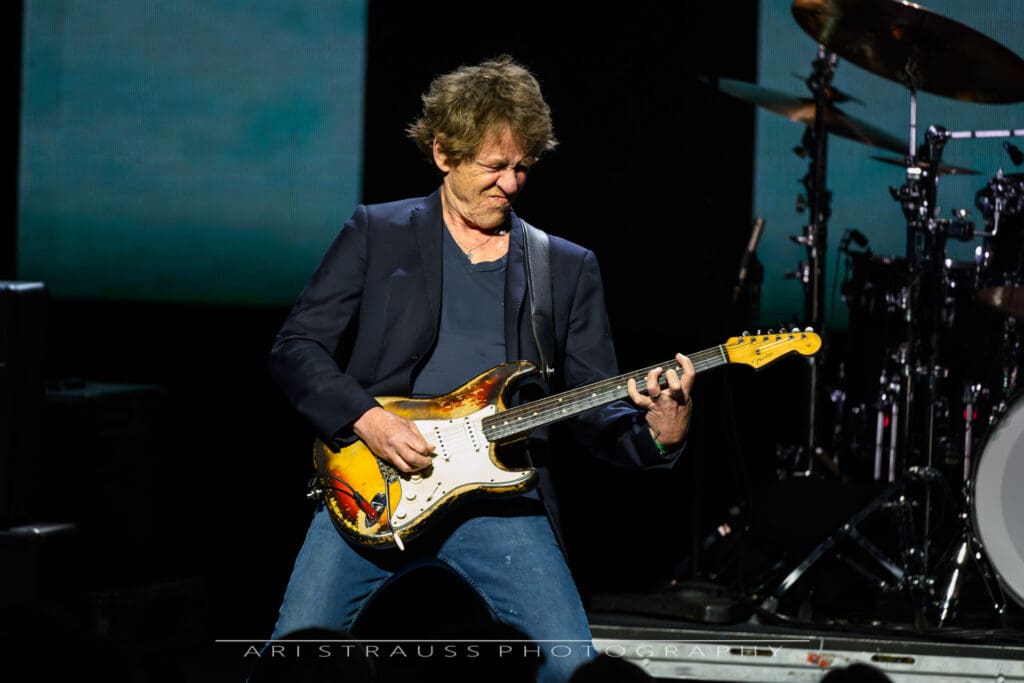
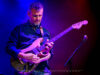
Dominic Miller’s role was equally essential because he resisted the most obvious temptation of the power trio format: overplaying. In a three-piece, the guitarist can easily feel obligated to fill every available gap. Dominic did the opposite. Using his weathered Fender Stratocaster, he leaned into crisp single-coil articulation, atmospheric delay, and carefully measured phrasing. His playing did not crowd Sting’s bass lines or step on the vocal melodies. Instead, he framed them.
That restraint gave songs like “Fields of Gold,” “Mad About You,” “Never Coming Home,” and “When We Dance” their emotional oxygen. Dominic’s guitar often functioned less as a lead instrument than as a painterly layer, adding shimmer, tension, or release without disturbing the center of the song. It was a master class in understanding that in a trio, silence is not empty space. It is part of the arrangement.
Stream Fields of Gold: the Best of Sting 1984 – 1994 from Spotify:
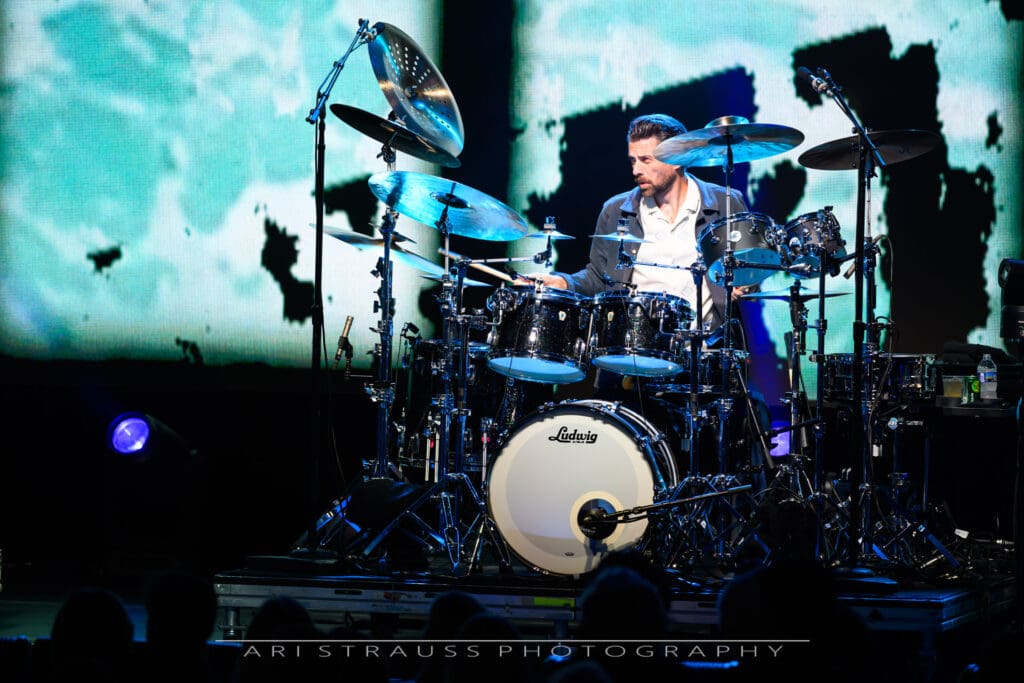
Chris Maas had the least sentimental role in the band and perhaps the most physically demanding one. Chris had to support songs that were originally built across different eras, genres, and production styles, while keeping them unified inside one stark rhythmic language. He did not simply imitate Stewart Copeland’s parts on The Police material, though the essential nervous energy was there when needed. His drumming gave the show a modern, grounded pulse, favoring forward motion over decorative flash.
The middle stretch of the concert demonstrated how well the format could handle shifts in mood. “Fortress Around Your Heart” carried its familiar melodic melancholy without needing extra ornamentation. “Shape of My Heart” benefited from the spare arrangement, its elegance sharpened rather than diminished. “Desert Rose,” a song that could have suffered most from the absence of its original production textures, survived by leaning into rhythm and vocal shape rather than trying to recreate the studio recording.
The encore offered one final nod to both the Police legacy and Sting’s broader songbook. “Roxanne” arrived with the expected recognition, but in this format it also served as a reminder of how much drama can be generated from a bass line, a guitar figure, a drum pattern, and a voice. The closing “Fragile” was the evening’s most revealing logistical pivot. Traditionally, Dominic handles the nylon-string classical guitar part, but here Sting switched to acoustic guitar to anchor the song, allowing Dominic to float ambient electric textures over the top. It was a small rearrangement with a larger message: the trio format was not a limitation to be hidden, but a design problem to be solved in real time.
Stream the entire set of Sting 3.0 at the Isle of Wight Festival, June 20, 2025, from YouTube:
At Wolf Trap, Sting 3.0 succeeded because it did not try to make three musicians sound like six. It made three musicians sound deliberate. The show’s power came from the confidence to remove layers, trust the songs, and let the architecture show. For an artist whose catalog has often been defined by sophistication, the evening was a reminder that sophistication does not always mean more. Sometimes it means knowing exactly what can be left out.
Setlist: Sting 3.0 at Wolf Trap, Night 1
- Message in a Bottle
- I Wrote Your Name (Upon My Heart)
- If I Ever Lose My Faith in You
- Englishman in New York
- Every Little Thing She Does Is Magic
- Fields of Gold
- Never Coming Home
- Mad About You
- Wrapped Around Your Finger
- You Still Touch Me
- Driven to Tears
- When We Dance
- Fortress Around Your Heart
- Can’t Stand Losing You
- Shape of My Heart
- Walking on the Moon
- So Lonely
- Desert Rose
- King of Pain
- Every Breath You Take
Encore:
- Roxanne
- Fragile
Enjoy some additional photos from Sting 3.0, Night 1 at Wolf Trap, May 21, 2926. All images copyrighted and courtesy of Ari Strauss.