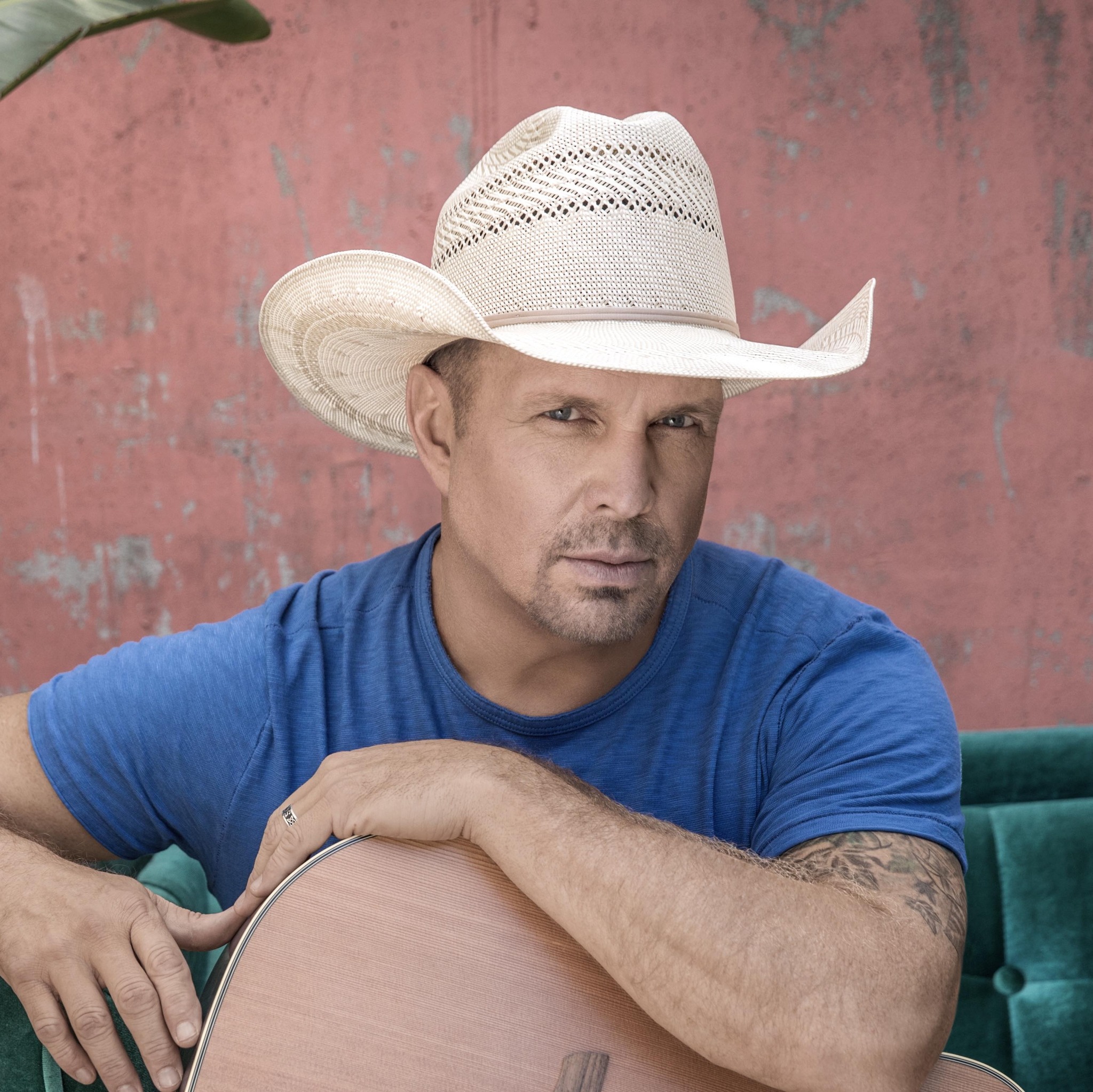
The spaceship sent a fierce tremble through Capital One Arena, the hum of its engines whipping the crowd into a frenzy before its commander had even appeared or sung a word.
And by “spaceship,” I mean the lighting rig, lowered to the floor of the in-the-round stage in a shape vaguely reminiscent of a shuttle’s thrusters. And by “commander,” I’m speaking, of course, about Garth Brooks.
By the time Brooks’ Blame It All on My Roots Tour reached Washington, it had already carried at least 100,000 people into an orbit of music, nostalgia, and timelessness.
The two-show run — Sept. 18 and 19 — also marked Brooks’ first arena concerts inside DC proper. His 1996-98 world tour, whose routing this trek is expected to mirror, brought him to the now-demolished USAir Arena in Landover, Maryland. His 2014-17 comeback tour skipped the DMV entirely, and a planned 2021 show at Baltimore’s M&T Bank Stadium was canceled and never rescheduled.
So, DC was perfectly primed to welcome back the Country Music Hall of Famer.
“Whoa, I said a little prayer tonight, before I came onstage,” Brooks sang as a piano, played by a man clad in a white tuxedo, rose from behind the stage. From a distance, the pianist looked suspiciously like the man who has sold more albums than almost anyone in history.
But it was the same fake-out Brooks used on his 1996-98 world tour. Brooks himself suddenly emerged from the center of the piano, belting, “…and I prayed that the District goes wild tonight.”
Bonus points for using the local jargon.
It’s exactly the kind of retro “gag,” as Brooks calls it, that makes this new trek feel like a resurrection of his classic arena tour. Even the opening song, “The Old Stuff,” is perfectly chosen for a show so happily devoted to bringing the old stuff back.
Another throwback: Brooks has revived his iconic “drum pod,” now expanded to accommodate full kits for both Mike Palmer, his touring drummer of four decades, and studio musician Milton Sledge. Sledge and guitarist Chris Leuzinger are among the seven musicians known as the G-Men, the studio players who recorded on Brooks’ albums and have increasingly joined him onstage during this decade. Their work earned the group induction into the Musicians Hall of Fame, much like legendary studio collectives such as the Wrecking Crew.
Brooks himself arrives as nostalgia personified: the same humble personality, enormous voice, and even larger stage presence. He wears the same style of headset, plays the same distinctive Takamine acoustic guitar with its guitar-shaped sound hole, and dons the same cowboy hat and Mo Betta pearl-snap shirts he wore 30 years ago.
The shirts are a little more subdued these days. No more flames climbing up and down his torso.
But Brooks still possesses the uncanny ability to make an arena feel intimate. He seems capable of making eye contact with someone almost anywhere in the room, pointing, waving, and acknowledging individual fans amid thousands. It creates an infectious exchange of energy that helps explain why his audience keeps coming back.
If the production is engineered to evoke nostalgia, the music itself evokes timelessness.
Brooks’ catalog is packed with songs that have become cultural mainstays over nearly four decades, and he plays them accordingly. “Two of a Kind, Workin’ on a Full House,” “Shameless,” “The Beaches of Cheyenne,” and, of course, “Friends in Low Places” — whose opening lyric gives the tour its name — all arrived with the force of communal ritual.
Stream “Friends in Low Places” by Garth Brooks on YouTube:
Brooks sang every note with power and seemingly limitless energy, bounding around his oval-shaped stage, waving at frantic fans, tipping his hat to children, and joshing with his bandmates. He occasionally stopped what he jokingly calls his “highly choreographed show” simply to marvel that the crowd remembered the words.
More than a decade into his return from self-imposed retirement, Brooks still seems genuinely baffled that people show up and sing every line.
Nowhere was that more apparent than when he slowed things down.
“Unanswered Prayers,” his ballad about gratitude for the life one ultimately receives rather than the life one once imagined, practically ceased to belong to Brooks at all. Alone onstage with his guitar, he simply strummed and listened in apparent wonder as the arena swayed and sang the song back to him.
His rendition of Bob Dylan’s “To Make You Feel My Love” followed, again without the band.
“I need more of that,” Brooks said after hearing roughly 20,000 voices rise together.
At the opposite end of the spectrum were the barnburners.
Brooks’ favorite song to perform live, the bayou-tinged “Callin’ Baton Rouge,” had guitarist Bobby Terry furiously picking banjo while keyboardist Blair Masters stepped forward with a good old Cajun squeezebox.
Yes, an accordion.
Stream “Callin’ Baton Rouge” by Garth Brooks on YouTube:
“Ain’t Goin’ Down (’Til the Sun Comes Up)” may have been the most frenzied number of the night, particularly for the band. The song sent the drum pod spinning overhead while bandleader Dave Gant whirled around at his keyboard.
The days of Brooks sprinting up the slanted pod and leaping from it while it spins are apparently behind him. But he can still reach up and grab onto the thing for dear life.
There is a reason this tour is producing such an emotional reaction among longtime fans. Country singer-songwriter Ward Davis wrote a widely shared Facebook post after seeing Brooks, describing the experience as making him feel like a kid again. Videos circulate of fans crying as they finally see a childhood hero after waiting decades.
There is tremendous power in hearing, in person, the song that meant the world to you growing up — or in catching Brooks’ eye from the stage and having, for a moment, some tiny personal connection with him.
Brooks himself has noticed it. He published an open letter attempting to describe the nearly indescribable combination of music, audience, and artist that has emerged on this tour.
And I’m fairly certain Brooks would insist that the artist remain last in that order.
Fans are also finding one another at these shows and discovering that their relationships with Brooks’ enormous catalog were not nearly as solitary as they might have seemed while growing up.
For me, that realization hits particularly hard.
I grew up listening to and loving musicians who, for the most part, had stopped touring. My formative musical world included artists who had retired to Branson and built their own theaters: Mickey Gilley, Jim Stafford, Mel Tillis.
But the giant among them, for me, was the man who had walked away from the business almost completely to raise his family: Garth Brooks.
To now see that artist doing what he does, on essentially the same scale as 30 years ago and with so many of the same elements that made those shows special, feels like stepping into a time machine I never expected would exist.
Brooks fans live and breathe his catalog perhaps more intensely than the followers of almost any other artist. They arrive carrying signs, hoping to hear even a few bars of a treasured deep cut.
“Wild Horses,” featuring fiddler Jimmy Mattingly, sent a hush through Capital One Arena.
Stream “Wild Horses” by Garth Brooks on YouTube:
Then Brooks spotted a sign requesting the Nitty Gritty Dirt Band’s “Fishin’ in the Dark.”
“You paid your money to come hear me sing other people’s music?!” he exclaimed with cartoonish incredulity.
Naturally, he obliged.
And, by the way, cowboy, I’m still waiting for that fiddle-flamed reimagining of Aerosmith rocker “The Fever.”
Maybe one day?
Please?
During the encore, the band returned for audience requests including “More Than a Memory” and Brooks’ debut single, “Much Too Young (To Feel This Damn Old).”
Once again, Brooks appeared genuinely astonished that Washington knew every word to a song he released at the very beginning of his career.
“Where you’re from, you don’t get enough credit for knowing your country music,” he told the crowd. “But you know your country music!”
That may be the secret of the whole tour.
Brooks has meticulously rebuilt the spectacle his fans remember — the songs, the band, the rotating drum pod, the jokes, the cowboy hat, the pearl snaps, and even a 30-year-old piano trick. But the real time machine isn’t sitting onstage.
It’s 20,000 people singing back the words.
For a few hours at Capital One Arena, Garth Brooks made the old stuff feel brand new again.