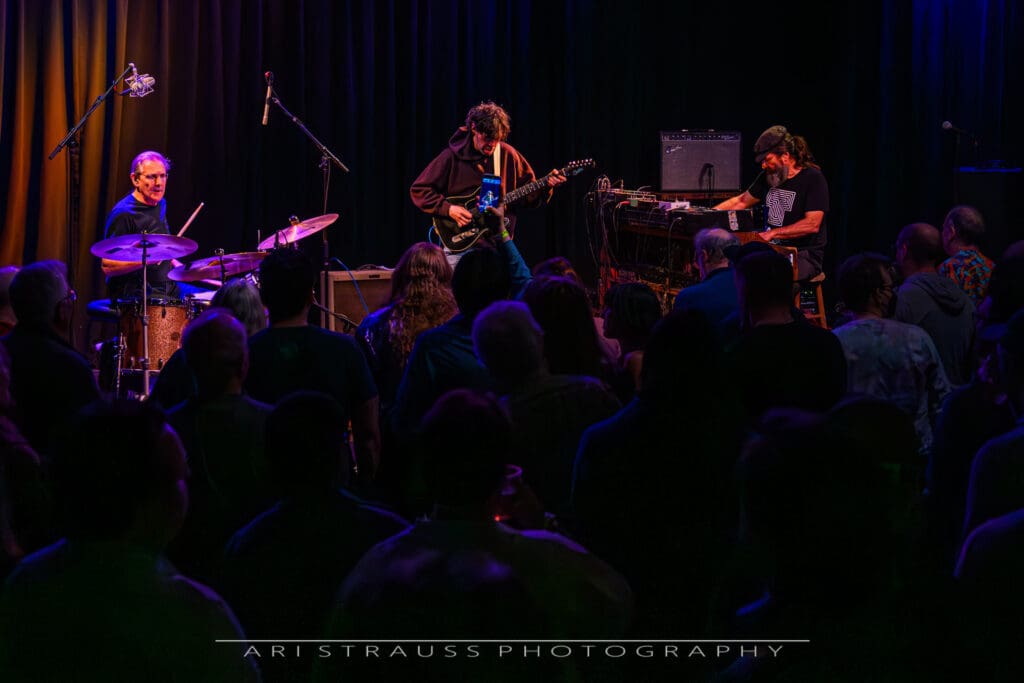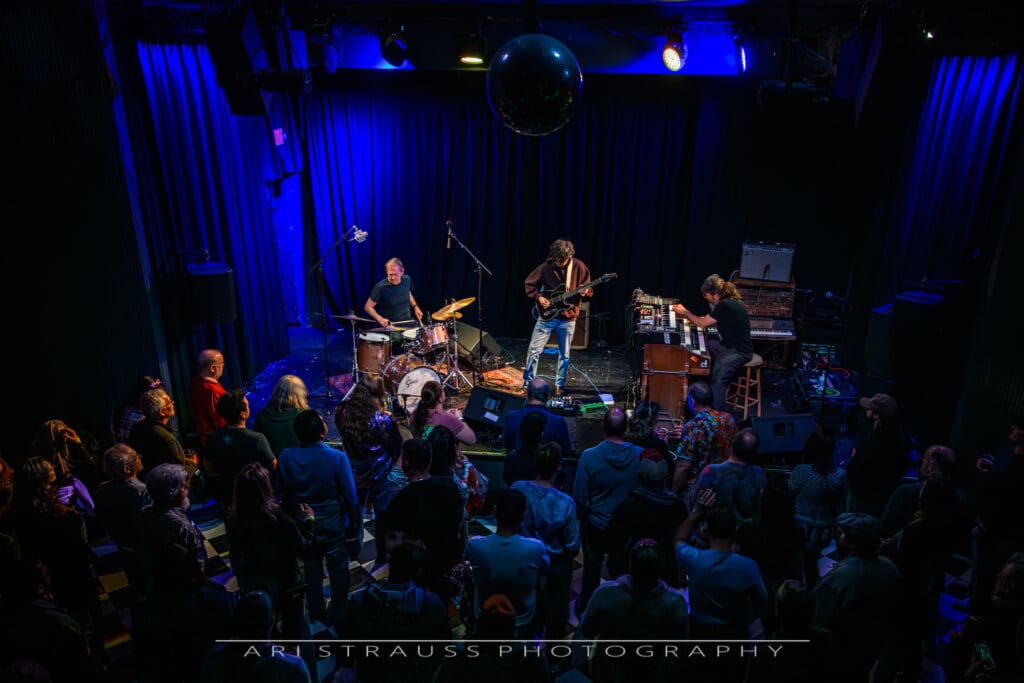
The improvisational trio LaMP recently turned Pearl Street Warehouse into something closer to a musical workshop than a conventional concert stage. Over the course of two expansive sets — each stretching roughly 70 to 80 minutes — the band delivered a groove-driven performance built almost entirely on spontaneity, intuition, and the chemistry between three musicians who seemed less interested in presenting finished songs than in exploring ideas together in real time.
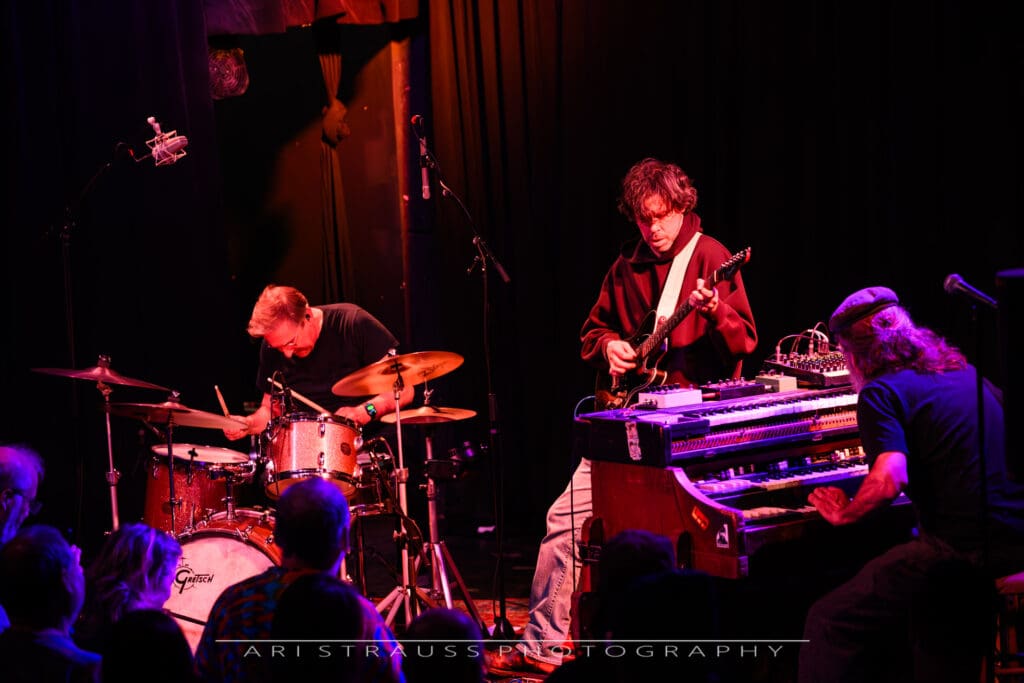
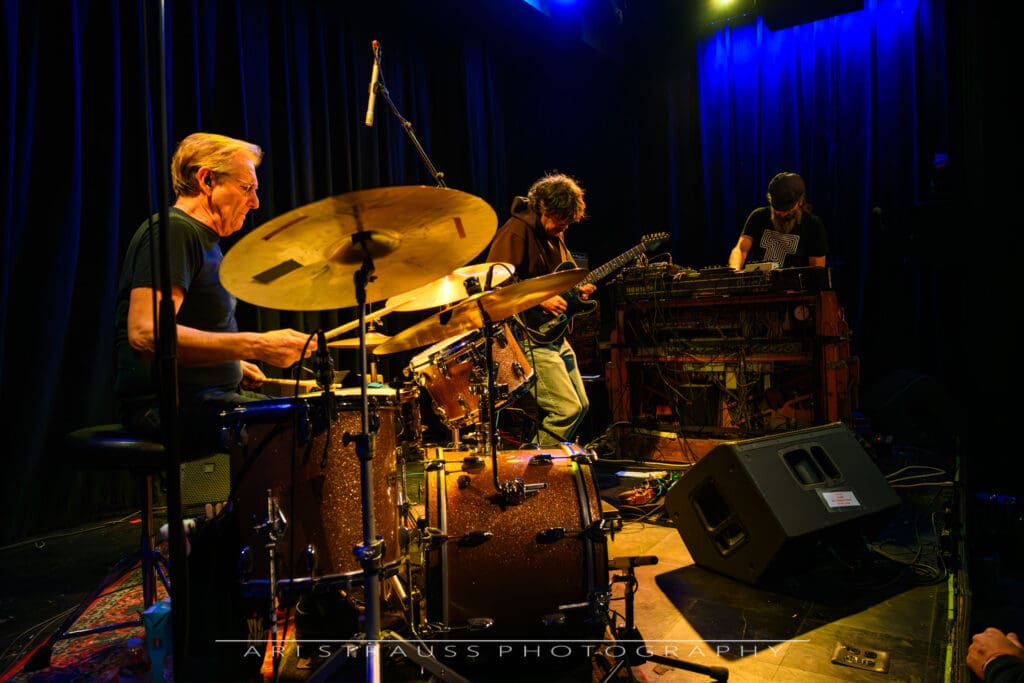
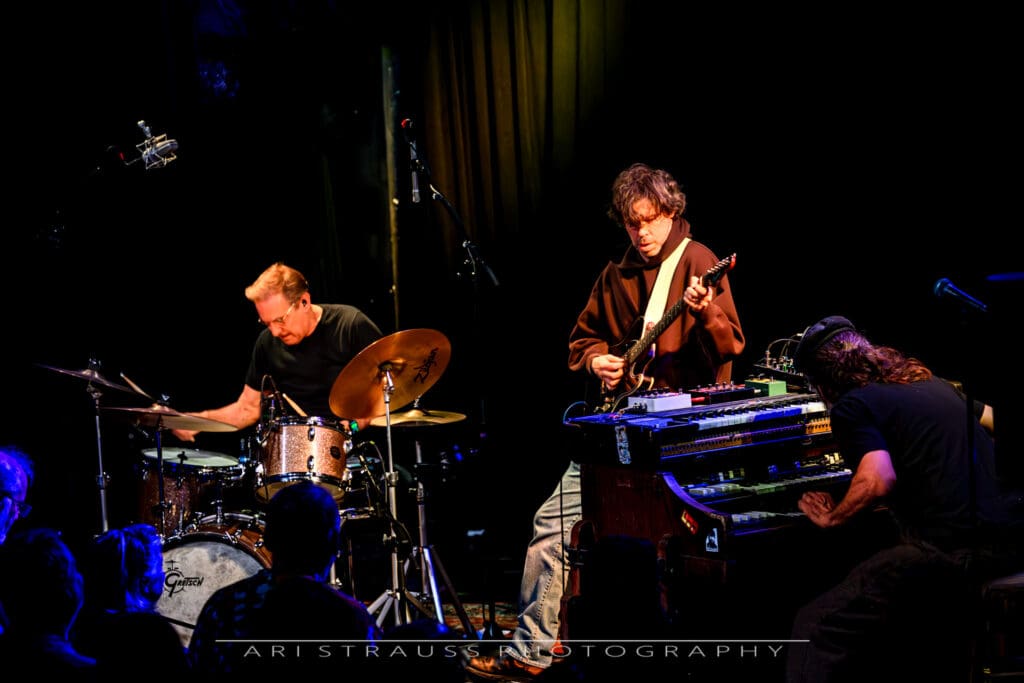
LaMP brings together guitarist Scott Metzger, keyboardist Ray Paczkowski, and drummer Russ Lawton. Each arrives with deep roots in the improvisational rock world. Metzger is widely recognized for his work with Joe Russo’s Almost Dead, while Paczkowski and Lawton have spent years anchoring the touring band of Trey Anastasio. Yet LaMP feels distinctly different from those larger musical settings. Stripped down to a trio format — guitar, organ, and drums — the project functions less like a touring production and more like a creative outlet where musical ideas can be tested and reshaped on the fly.
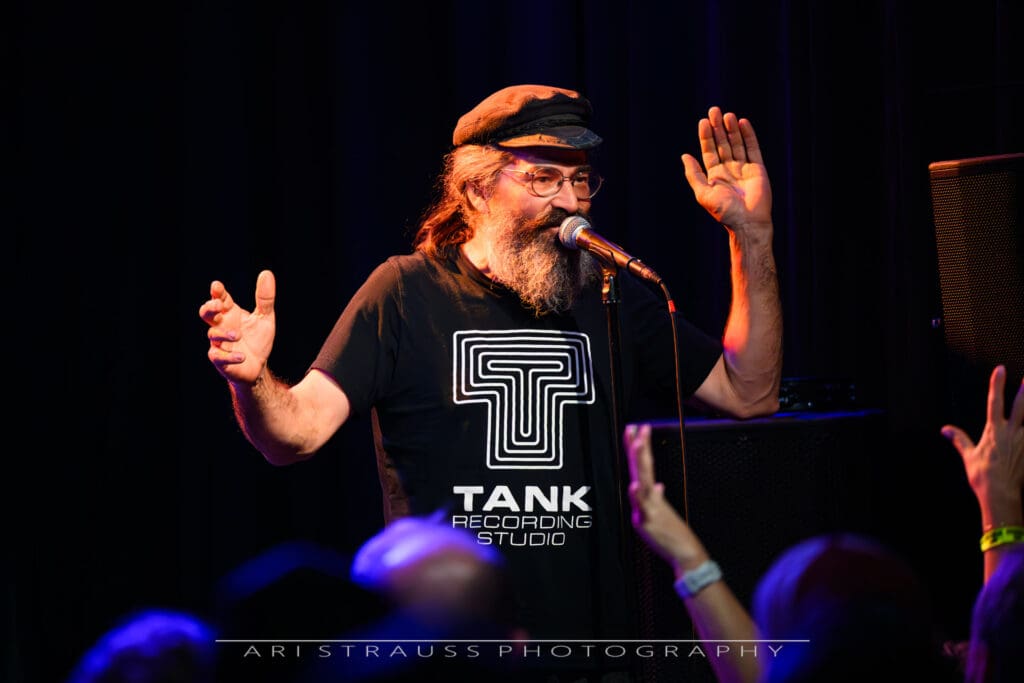
That spirit of experimentation became clear early in the first set at Pearl Street Warehouse on April 9. After several extended instrumental passages, Ray briefly stepped to the microphone to greet the audience and introduce his bandmates. His description of the evening’s approach was refreshingly direct: “We’re gonna play from what comes out of our head.” The remark drew appreciative smiles from the crowd, but it also neatly framed the rest of the night. Rather than announcing song titles or working through a predetermined setlist, the trio allowed grooves to emerge organically, letting ideas build and dissolve as the musicians responded to one another.
Stream One Of Us (2025), the latest studio release from LaMP, on Spotify:
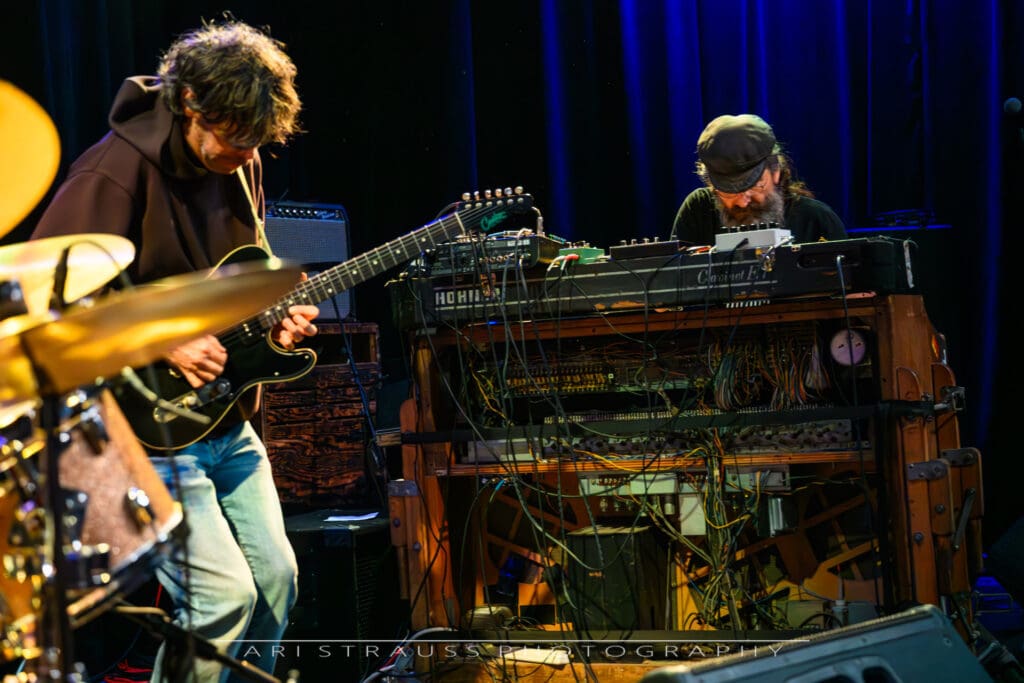
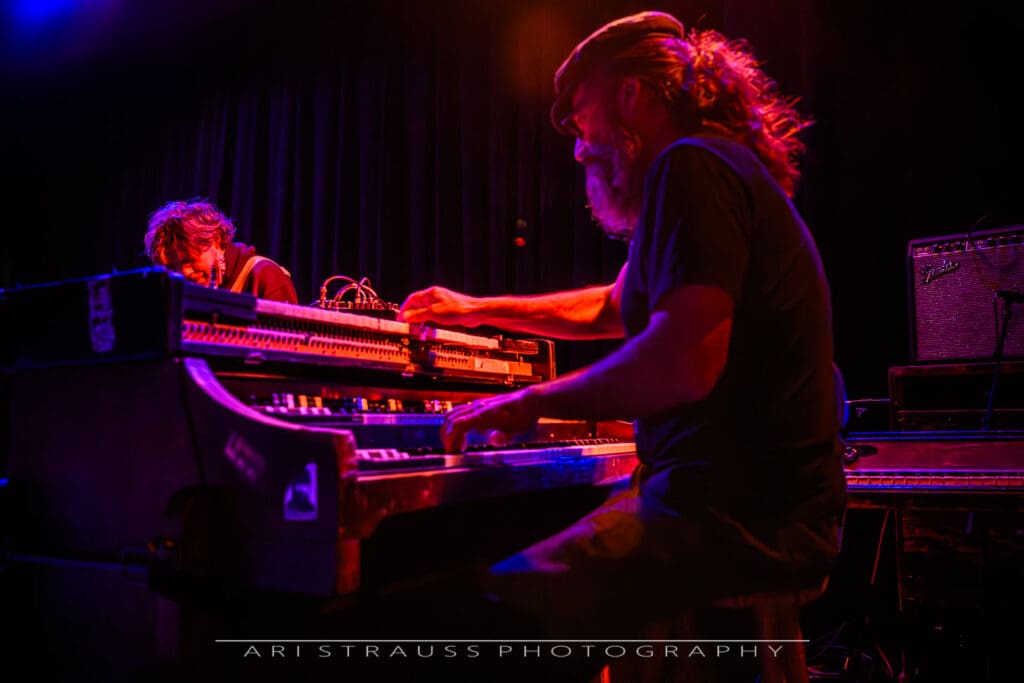
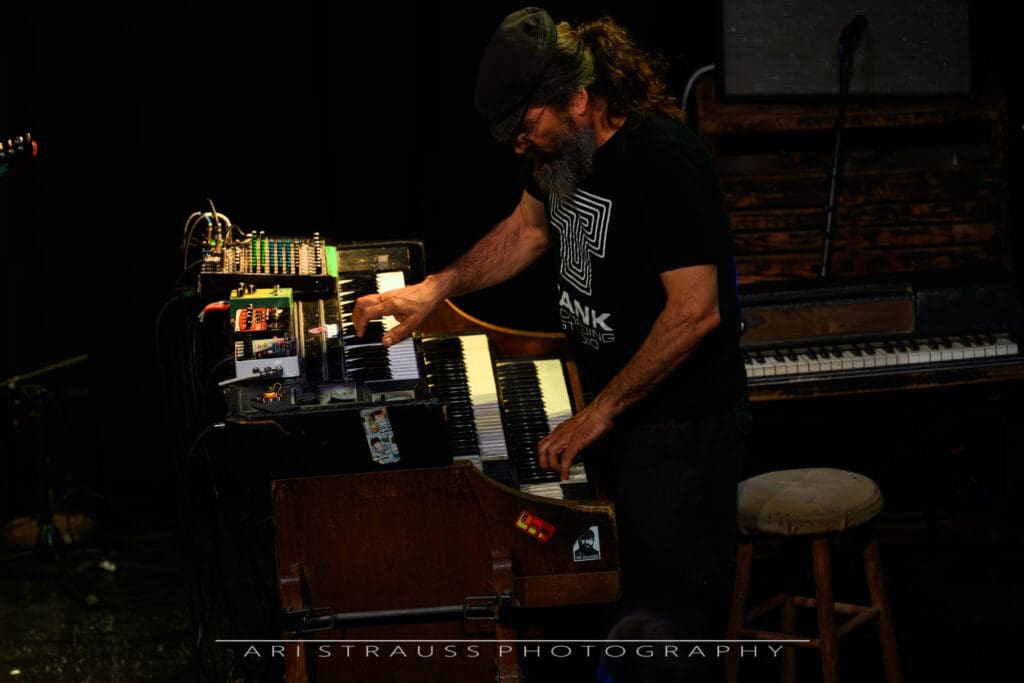
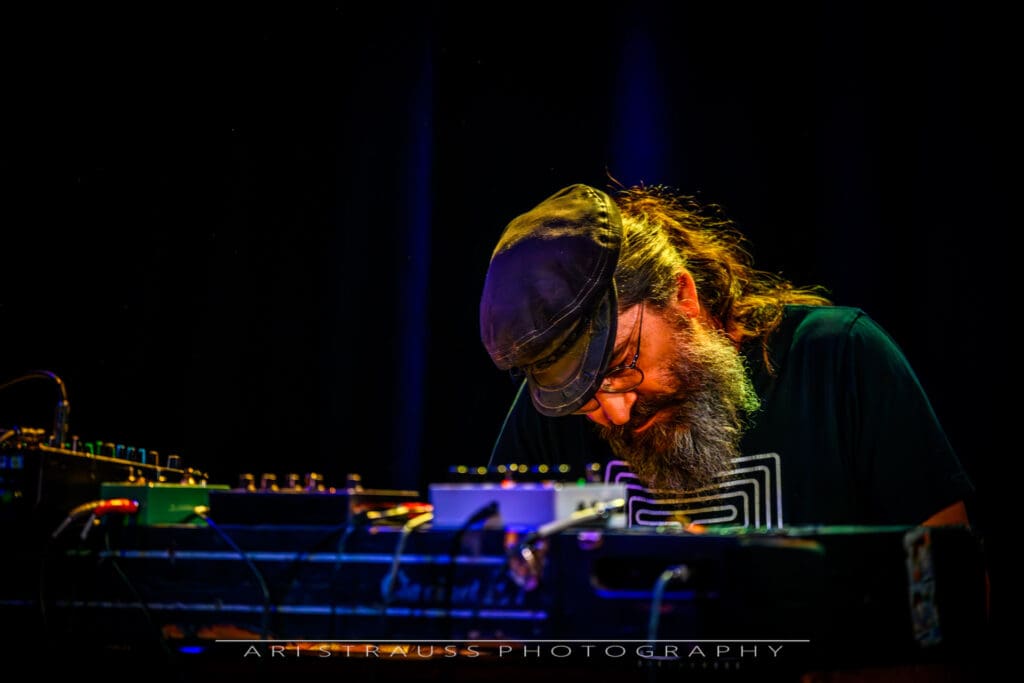
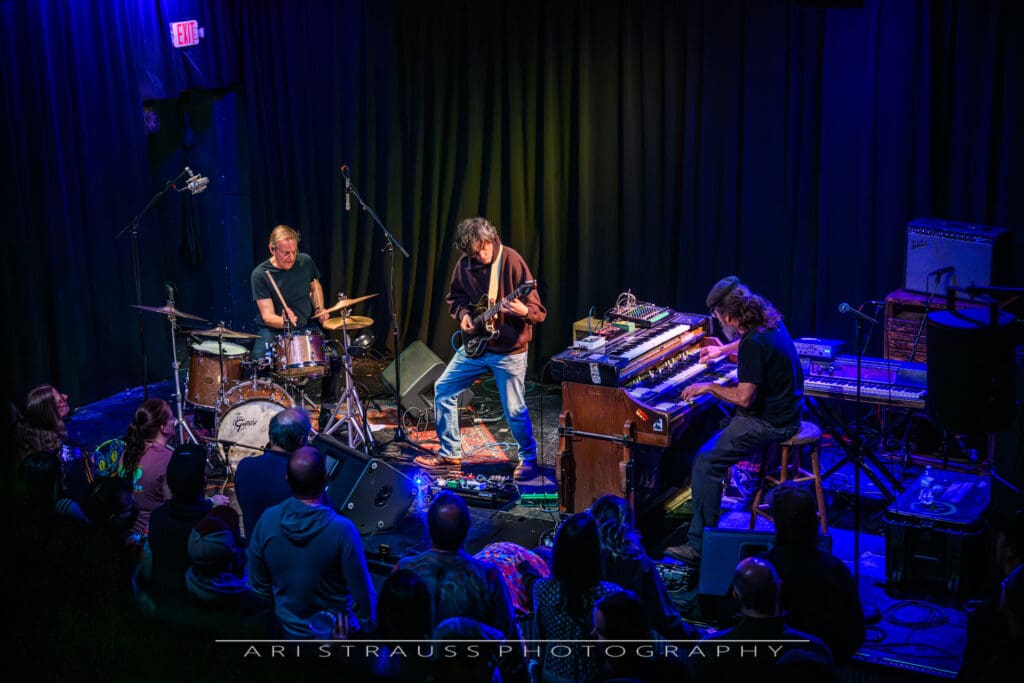
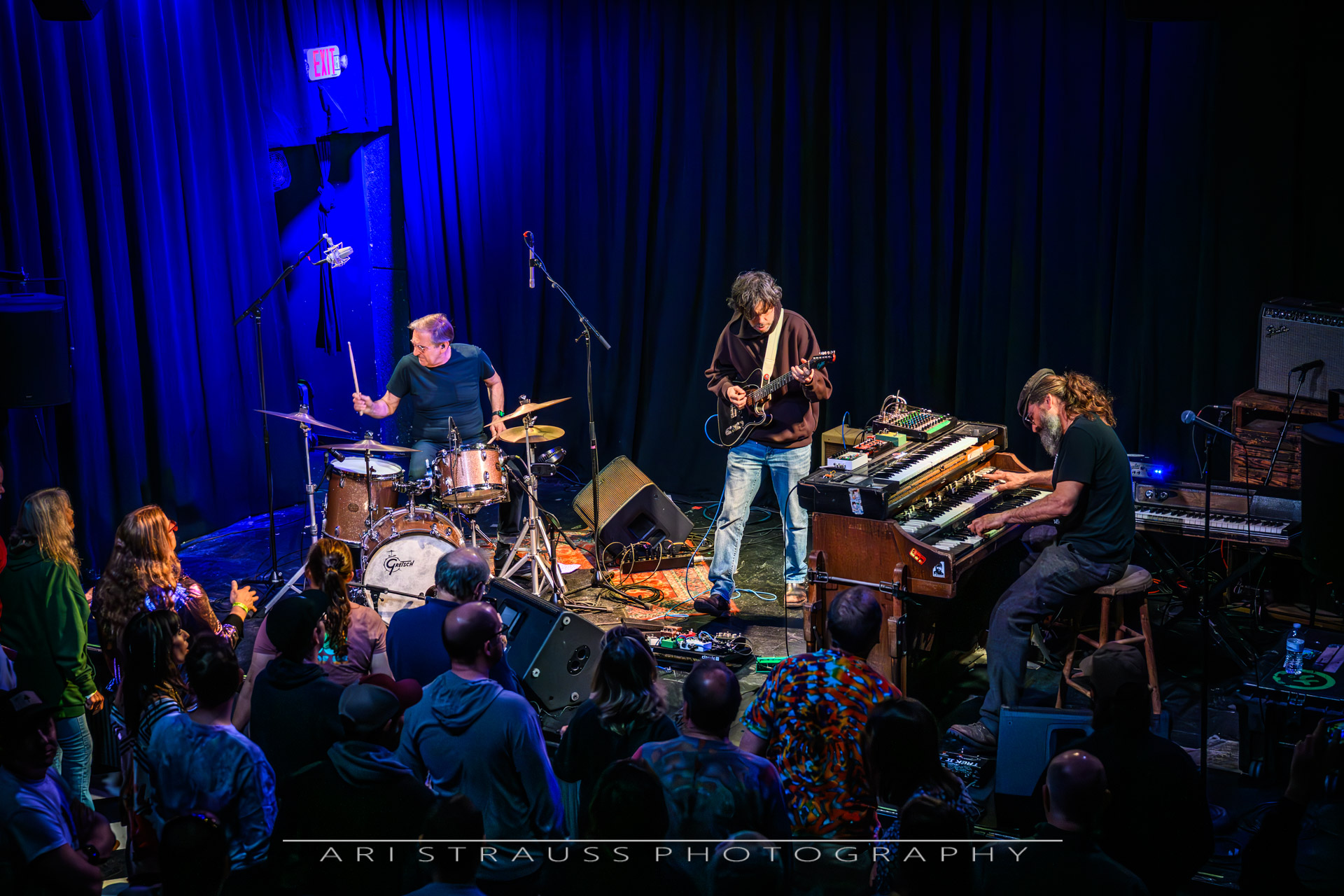
The organ trio format placed much of the evening’s harmonic and rhythmic responsibility on Ray’s keyboard rig. Anchored by a Hammond B3 feeding into a Leslie rotating speaker, his setup also incorporated a Fender Rhodes and Hohner Clavinet. Without a bass guitarist in the lineup—and notably without Hammond bass pedals visible on his console—Ray supplied the low end primarily through left-hand bass lines on the organ. The thick, swirling Hammond tones filled the room and provided a flexible foundation that allowed the trio’s improvisations to stretch comfortably above the groove.
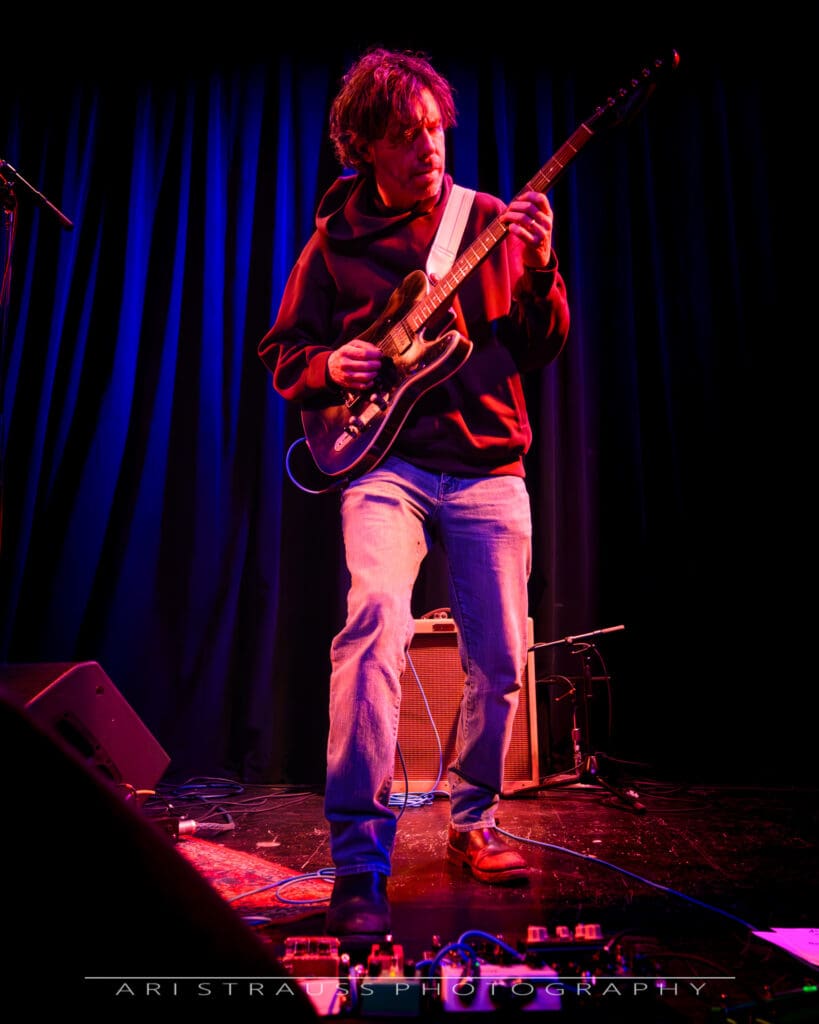
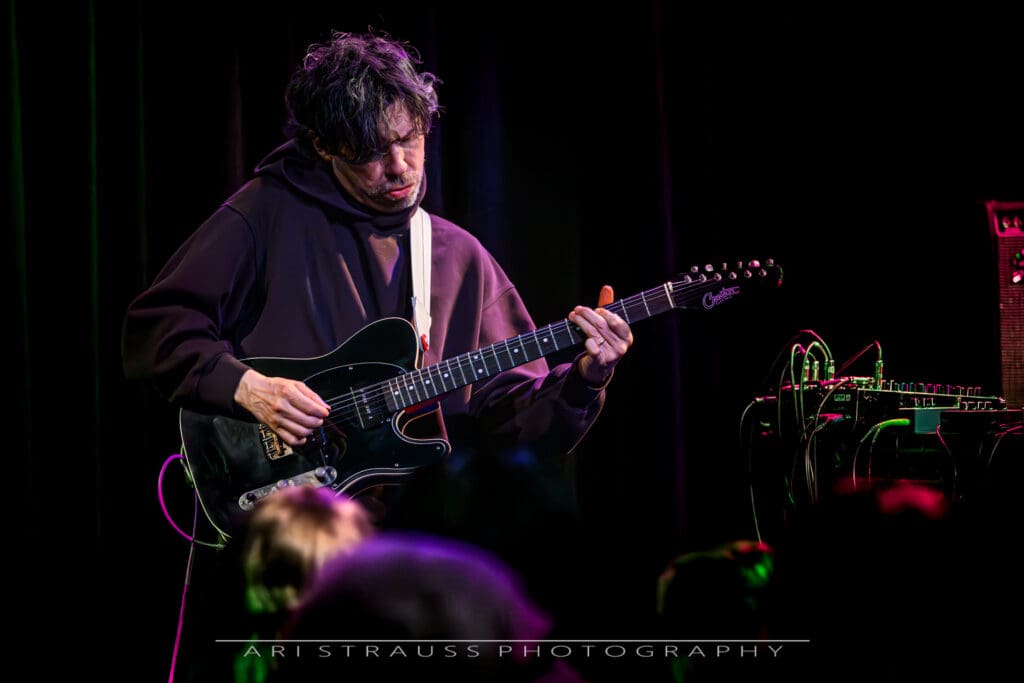
Scott’s guitar work served as the trio’s most fluid melodic voice. Playing a custom Creston T-style guitar outfitted with P-90 pickups, he leaned into a tone that balanced warmth and bite. His rig favored responsiveness over sheer volume, pairing the guitar with a small tube amplifier and a compact pedalboard featuring fuzz, overdrive, and looping effects. The resulting sound could shift quickly from clean, jazz-inflected phrasing to gritty blues textures and ambient swells, often within the span of a single improvisation.
Some of the most revealing moments of the evening came from the visible interaction between Scott and Ray. At several points during the performance, Scott literally stepped back from his position onstage, lowering his guitar slightly while Ray explored a new idea on the Hammond. For a few seconds he simply watched and listened. Then Scott would step forward again and respond with a guitar phrase that developed the keyboard motif further. The visual exchange mirrored the musical one, with the two musicians constantly trading space and leadership as ideas unfolded.
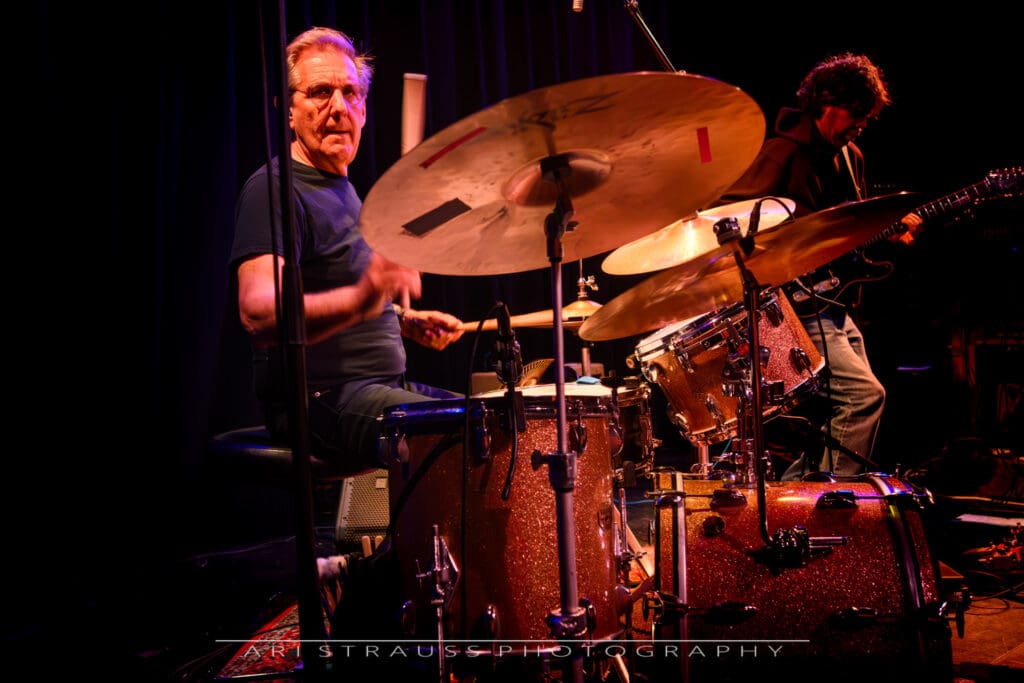
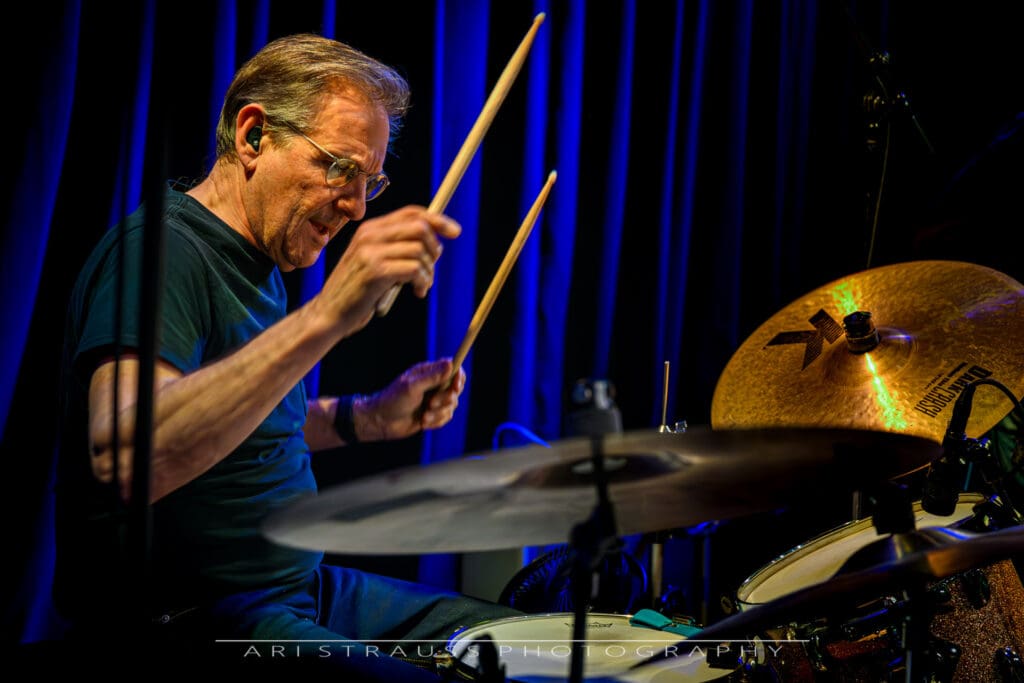
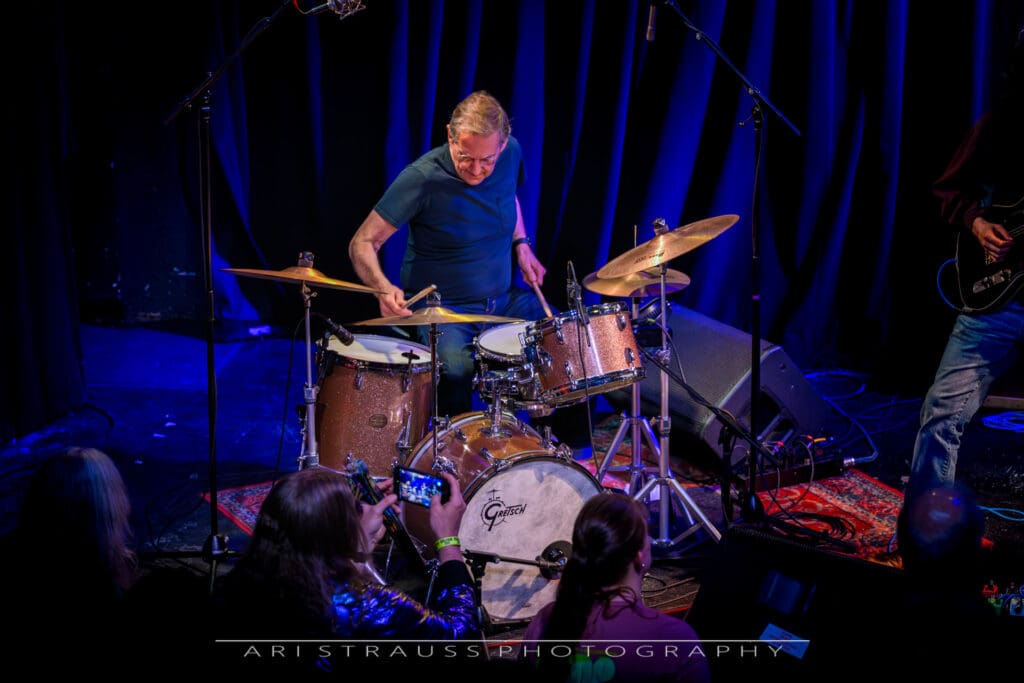
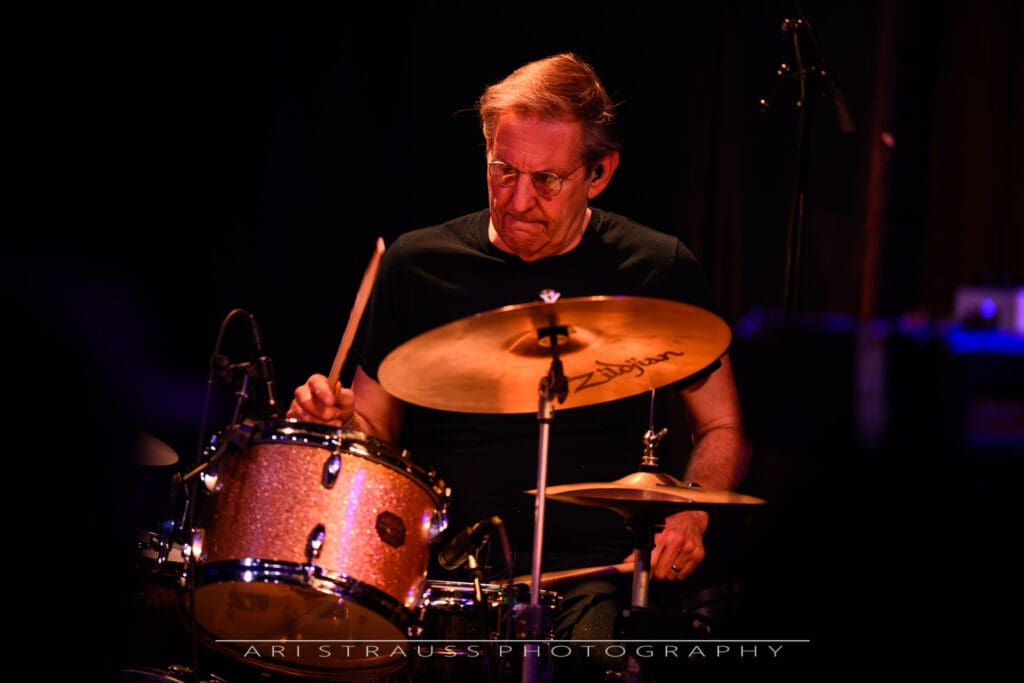
Behind them, Russ anchored the trio with a compact Gretsch drum kit and a style that emphasized groove and subtlety over flash. His playing rarely relied on dramatic fills or heavy-handed accents. Instead, Russ settled the band into a deep, relaxed pocket that allowed the improvisations to breathe. Ghost notes on the snare and carefully placed cymbal accents added texture without disrupting the flow, giving the music a steady but unforced momentum.
Across the two sets, the trio’s musical vocabulary occasionally hinted at a wide range of influences. Funk-inflected keyboard lines sometimes evoked the rhythmic language of Stevie Wonder, while tighter harmonic passages carried shades of the polished jazz-rock sensibility associated with Steely Dan. Elsewhere, the music drifted into improvisational terrain familiar to fans of Phish or the exploratory jams of the Grateful Dead. These references surfaced briefly before the trio steered the groove somewhere new, reinforcing the sense that the music was evolving moment by moment.
If you missed the show, enjoy it on YouTube, courtesy of the TimeZonerTV channel:
The audience inside Pearl Street Warehouse reflected the lineage of that improvisational tradition. While a handful of younger listeners were scattered through the crowd, the room was largely filled with fans in their fifties and beyond—listeners who grew up on the Dead and Phish and seemed eager to experience these musicians in a smaller, more intimate setting. Packed close to the stage, the audience followed the music attentively, responding with cheers when a groove peaked or a particularly inspired solo emerged.
That intimacy proved to be one of the evening’s defining strengths. With the band only a few feet from the front row, listeners could easily see the subtle cues guiding the improvisations—a glance between players, a nod signaling a change in direction, or Scott stepping back to listen before rejoining the musical conversation. Those small gestures reinforced the sense that the performance was unfolding collectively, shaped by the musicians’ willingness to listen as closely as they played.
By the end of the night, LaMP had delivered more than two hours of music that felt less like a collection of songs and more like a continuous exchange of ideas. Freed from the expectations of larger ensembles and elaborate productions, Scott, Ray, and Russ used the small Pearl Street stage as a proving ground for musical exploration. The result was a performance defined not by setlists or individual compositions, but by the process itself—three accomplished musicians responding instinctively to one another and allowing the music to go wherever the moment suggested.
Enjoy some additional photos from LaMP’s April 9, 2026 performance at Pearl Street Warehouse. All images are copyrighted and courtesy of Ari Strauss.