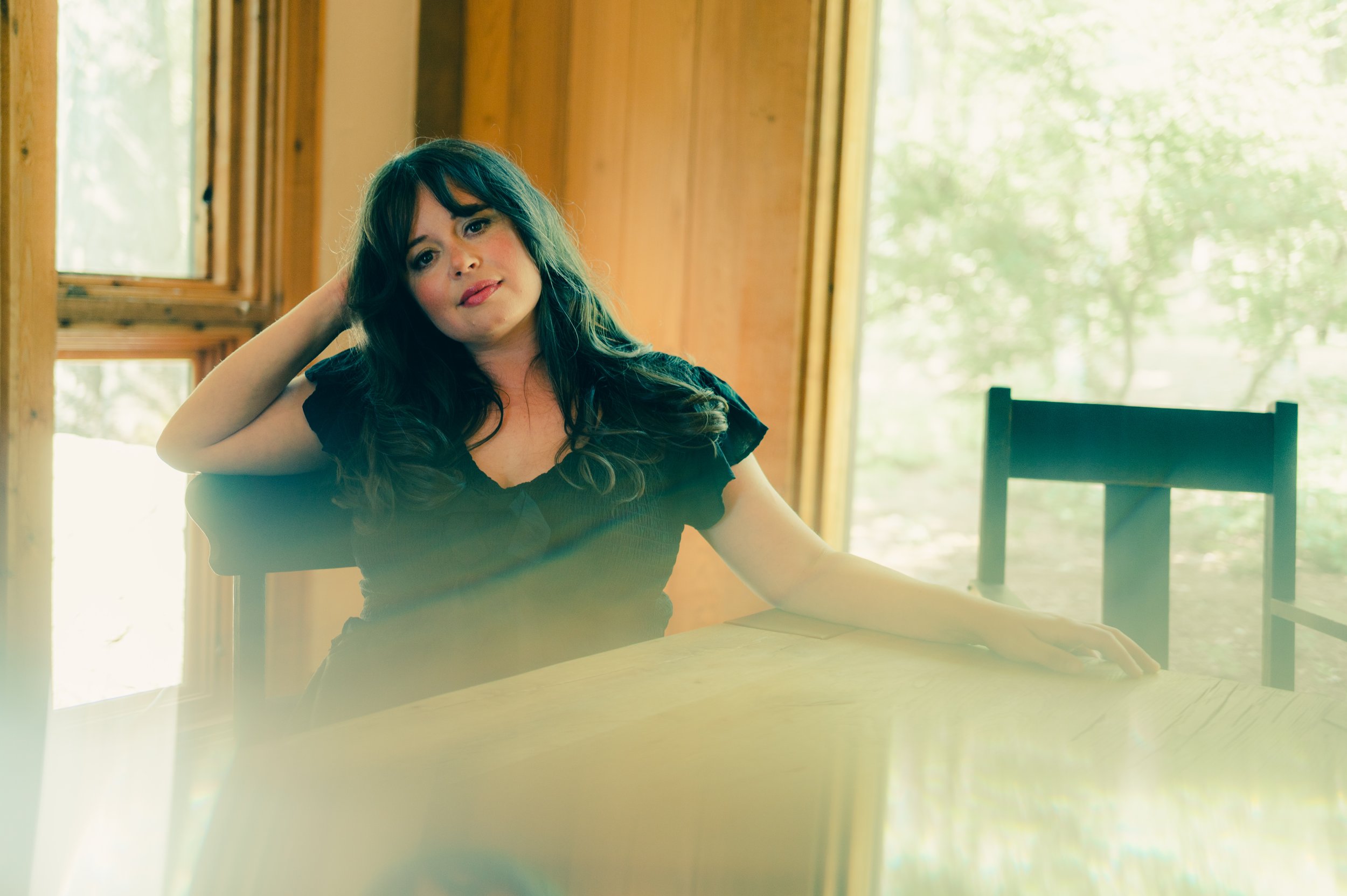
It’s hard to believe it’d been three years since Emily Scott Robinson had last appeared in the DMV. That night, she was touring her EP, Built on Bones, a suite of songs influenced by and meant for a stage production of Macbeth. She recently appeared at the same venue, Jammin Java, touring behind her latest album, Appalachia, released earlier this year. It was a night of tender songs, intimate stories, where she was surrounded by friends and family in a warm show that was full of heart.
Robinson has long been a critical favorite, with her albums landing on best of the year lists at Rolling Stone and Stereogum, and she’s drawn critical raves from the Washington Post, NPR, and more. Her work draws on country (especially Americana) and folk traditions, as well as literary influences (most evident in her Shakespeare project), especially singer-songwriters like the late John Prine. It’s fitting that she’s signed to his label, Oh Boy Records. In her performance at Jammin’ Java on April 2, she paid her respects to John with “Cheap Seats,” about the time she went to see Prine and Bonnie Raiitt at the Ryman, buying a discounted ticket with an “obstructed view” which put her directly behind a post. (This isn’t much of a disincentive for me, because, first, I’m a hobbit, and can’t see over people, and, second, with all the wear and tear on my body, it’s hard to stand at shows. It made the decision to buy a ticket in the nosebleed section for Springsteen in May an easy one.)
Emily opened with the title track of Appalachia. She explained that she wrote it after Hurricane Helene wreaked devastation on western North Carolina in 2024. (I recall seeing posts at the time by one of my favorite writers, Nathan Ballingrud, who lives in Asheville.) The album, she said later in the evening, is about grief and death, but it’s also about life.
Watch the official music video for “Appalachia” by Emily Scott Robinson on YouTube:
On “Time Traveler,” Emily nwrites about her late grandmother, who had what she described as a “gentle” form of dementia before she passed at the age of 90. This song really struck a chord with me; the description of the dementia as time traveling reminded me of one of the stories in Lavie Tidhar’s Locus Award-winning mosaic novel Central Station (which I highly recommend). Her lyric about a “darkness in the DNA” resounded with me, too; autism, bipolar disorder, anxiety, ADHD, and oppositional defiance are pervasive on both sides on my family. As another great songwriter once put, I’m trying everyday to “keep the Devil down in the hole.”
Loss rears its head again on “The Fairest Feeling.” The song wasn’t originally planned for the album. Robinson wrote it after learning that an old friend from North Carolina, where she grew up, had taken his own life at the age of 38. But there also moments of bright light, like “Bless It All” — which she said is her favorite song on the album — which is about the blessing of children. She got choked up addressing a friend in the audience who had her small children with her, inviting her to use the green room if she needed to attend to her little ones. It was a tender moment that showed Robinson’s heart and kindness.
The album also addresses gentrification on “Dirtbag Saloon,” on which she writes about “places that used to be cool and became unaffordable.” Robinson used to live in Telluride, Colorado, but it became more expensive, with “the billionaires driving the millionaires out.” There was some levity in the show when she introduced “Cast Iron Heart,” which led to her receiving a promotional heart-shaped cast iron skillet. She recorded a video of herself making a heart-shaped pancake, which she edited to cut off before she failed to flip the pancake and it turned into a terrible mess. She reminded us that everything we see on social media isn’t real.
Watch the official music video for “Cast Iron Heart” by Emily Scott Robinson featuring John Paul White on YouTube:
“Things You Know The Hard Way” is a funny one, too, and everything in it comes from Emily’s own experiences or those of people she knows. One thing I learned the hard way: don’t start a fight with a linebacker for the Michigan Wolverines. She wrote “Hymn for the Unholy” in 2021, when she was going through a divorce. She did one of the songs from her Macbeth suite, “Old Gods,” which is for the witches in the play. (I’d love to see a production where they’re played by Neko Case, Jenny Lewis, and Natasha Lyonne.) Robinson rounded out the set with “Raise a Glass,” from Traveling Mercies, and “Time for Flowers,” before finishing with an old folk song, “The Water Is Wide.”
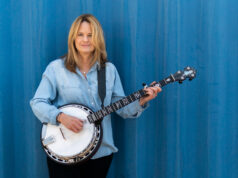
Harrisonburg native Amy Martin opened the show, and she later joined Robinson to add vocals for part of her set. Martin shared that she has a new album coming soon, Bones, which explores themes of grief. “Travelin’ On,” she told the audience, is about her relationship with her father. Before playing the title track, she said that she’d taken a red-eye flight out from Colorado for this show, so she could be with her seven-month-old daughter. Like Robinson, she lightened her set with a fine wit, quipping that she was gay, “if you hadn’t figured it out from the jumpsuit.” She did a song she’d written for her little brother, who’d “made some bad decisions” and was going to prison. She also played “Give Me Hell” and finished with “Coocoo,” an old bluegrass instrumental she’d added lyrics.
I was especially impressed with Martin’s powerful voice, and the songs were just as strong. Robinson’s, of course, were beautiful, full of keen observations, deep emotion, and compassion. Many of them, as I’ve said, touched me in a very personal way, and I could feel the same was happening to much of the audience. I can’t recommend strongly enough that, if you have the chance to see Emily Scott Robinson perform, you should absolutely go. It’s a moving, powerful, experience that will feed your heart and soul. Robinson is one of the best younger songwriters working today, and her work is a reminder of what folk music can be at its best, allowing people to connect over life’s challenges, joys, sorrows, and triumphs.