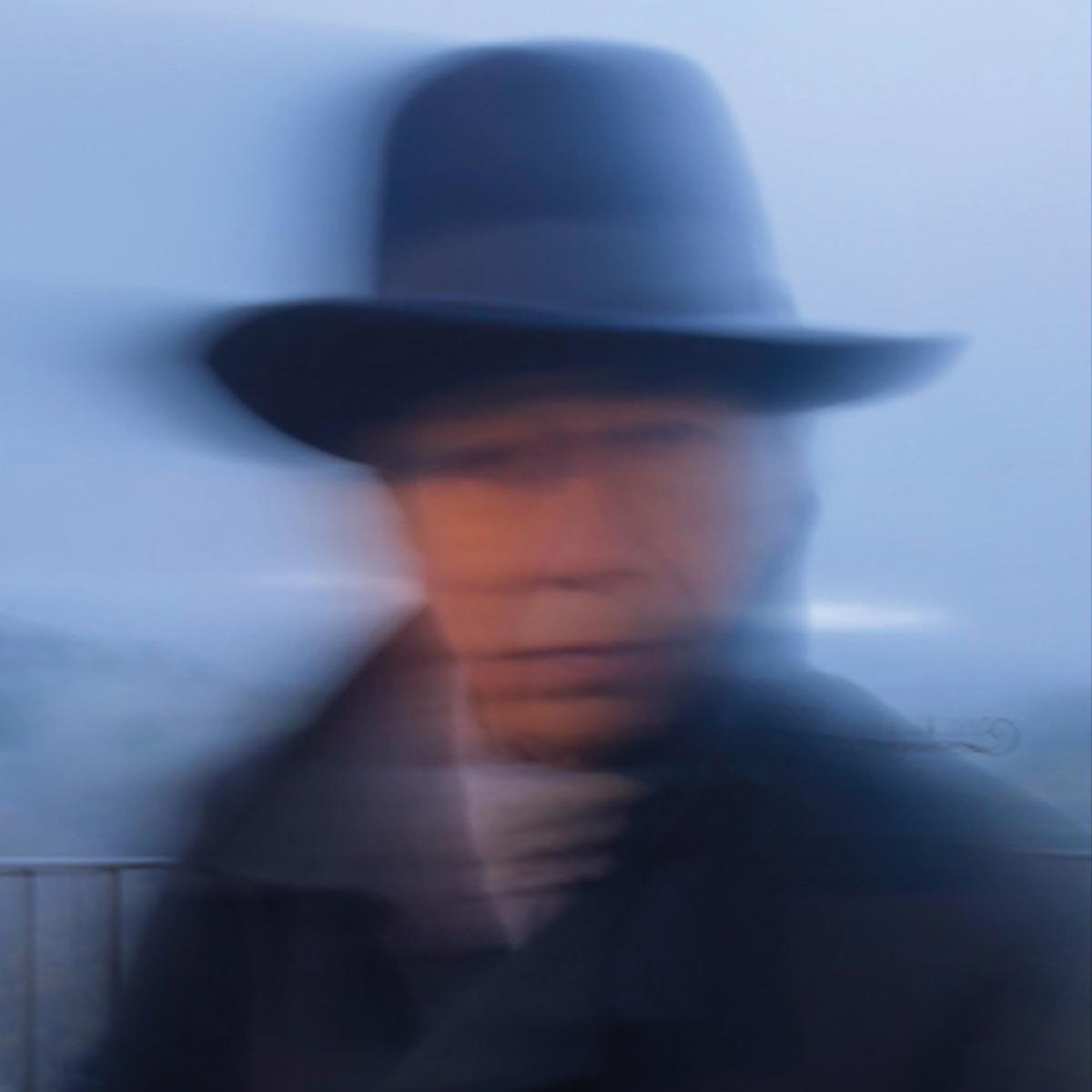
Alejandro Escovedo has lived many lives, both musically and personally, from being a member of the punk band the Nuns and cowpunk pioneers Rank & File to a respected pillar and elder statesman of Austin’s singer-songwriter scene. His songs, whether they’re full of loud, distorted, noise, or they’re intimate, acoustic ballads, chronicle both his personal journey and the long, complicated story of his family. In his recent appearance at The Hamilton Live, Escovedo showed off the full range of his talents as a guitarist, songwriter, and storyteller.
On July 19, Alejandro began by mentioning that Spain, where he had just spent a month working on a record with a friend, had just won the World Cup. After playing “Sometimes,” he brought up the Nuns, saying, “If you clap for the Nuns, you never saw the Nuns.” He explained how the band was created by himself and his fellow film students at Marin College for a movie, called 18 1/2 (after Fellini’s 8 1/2) about the worst band in history.
Escovedo and his girlfriend hitchhiked from Los Angeles to San Francisco in 1974, after a concert celebrating the death of glitter rock. “Sacramento & Polk” tells the story of their time living in transient hotels, surrounded by people released from area mental health and correctional institutions. He followed that with “Chelsea Hotel ’78,” which he wrote about his time in the legendary New York hotel that was home to numerous artists and musicians, including Mark Twain, Bob Dylan, Patti Smith, and Leonard Cohen.
Watch Alejandro Escovedo perform “Chelsea Hotel ’78” live for WNRN by YouTube:
Alejandro first played in the DMV as a member of Rank & File, before going on to play here on his own for the last several decades. He performed many times at the now-closed Iota, where he became good friends with the late Jay Jenk, who was the chef there and at other places in the area. Jay’s father, a “staunch Republican,” would even come to his shows, despite having a very different worldview and disagreeing with much of what Escovedo had to say. He dedicated “Deerhead on the Wall,” which is about “taxidermy and Buddhism,” to Jay’s memory.
For the last 40-plus years, Alejandro, who was born in San Antonio in 1951, has lived in Austin. He moved there after playing there with Rank & File, on what he described as a seven-week tour that only had seven shows. Today, he said, it’s a very different place from when he first moved there in the ’80s, still a small college town, and home to some of the finest musicians, including Joe Ely, Townes Van Zandt, and Lucinda Williams, who was busking at the time. Austin’s population has exploded, and many of the artists and musicians have been priced out of the city proper. It had already changed a lot by the time I lived there from 2003-2004, and his since changed even more, but it still had some of that Wild West atmosphere, and I had some real adventures in my brief time there. Escovedo wrote “Bottom of the World” with Chuck Prophet about these changes.
From there, Alejandro went on to speak about his family. His father was born in Mexico in 1907, and he was raised by his grandparents after his parents emigrated to Texas to find work. His grandmother would take him to the train station, where they’d make up stories about the people they’d see. When he was just 12, he hopped a train north to go looking for his parents, which was — and still is — quite dangerous. He found them, but his father was abusive, so ran away to California when he was 16.
To interject for a moment, I once heard someone say their great-grandparents’ problems were basically the same as their own, and I thought it was one of the craziest things I’d ever heard. My paternal great-grandfather emigrated to Minneapolis from the Ukraine, and he never learned English, speaking only Yiddish. He worked as a shoemaker, and lived in grinding poverty with his wife and 10 kids in two rooms. My grandfather never slept on a bed until he was on adult.
Escovedo went on to describe how his father was a handsome, charming man, prone to wandering, adding that he had a total of 13 children between his two marriages. At one point, the family packed up and moved from San Antonio to Orange, California, in the heart of the deeply conservative Orange County. There, Alejandro experienced racism; his teachers refused to call him by his real name, insisting on using Alex, “a name I deeply hate to this day.” When he got into surfing, he sometimes passed as Hawaiian, “to avoid getting my ass kicked.” As an aside, this reminded me of how the wrestler Ricky Steamboat, who was of mixed White and Japanese ancestry, was billed as being from Hawaii.
I can only imagine what he went through in that time and place. My father grew up in St. Louis Park, a predominantly Jewish suburb of Minneapolis, which was and is a much more progressive place, around the same time. He’s told me one particularly harrowing story of a Little League game that ended in a brawl after a member of the opposing team, which included future wrestling superstar Ric Flair, shouted “kike!” Even growing up in the suburbs of Akron, Ohio, in one of Ohio’s bluest counties, in the ’80s and even into the ’90s, I got called “fucking Jew” and “Jewboy.” I also saw, in grade school, the White students refusing to allow the Black students to play football with them at recess. (Some years later, one of those Black students thanked me for speaking up about it, which was the right thing to do, but it probably didn’t help my already difficult social life as a kid on the autism spectrum.)
After sharing these stories, Alejandro played “San Antonio Rain,” followed by a medley of the instrumental piece “Fort Worth Blue” and “Five Hearts Breaking,” one of the earliest songs he wrote and recorded. The former was inspired by the late Stephen Bruton, who grew up in and started his career in the Fort Worth music scene, which also included folks like T Bone Burnett. Bruton went on to play with Kris Kristofferson and Bonnie Raitt, and he produced albums for a number of artists, including Escovedo’s first three records. “Five Hearts Breaking,” he explained, was inspired by an early neighbor of his in Austin, Billy Smith, who was 80 when they met and had played guitar with Prince Albert and the Sheiks when he was younger.
Watch Alejandro Escovedo perform “San Antonio Rain” live for WFUV on YouTube:
Alejandro admitted that big families run in his family, and he has seven kids himself. He made the mistake, he said, of asking his son Paris what he though of his work, and he said it was “old man’s music.” Paris had a one man which, in one of the evening’s funnier bits, Alejandro, said he heard arguing in the next room. He wrote “Down In the Bowery” with Chuck Prophet for Paris.
To round out the set, Escovedo played “Sally Was A Cop,” which was inspired by the drug war, and “Teenage Luggage,” from his 2018 rock opera The Crossing. He also shared that, next April, he has new album coming out, My Ego Broke My Fall, which he made over a year working with longtime Dylan associate Charlie Sexton and Britt Daniel of Spoon, and he’ll back in the spring with his band. He finished the show with his go-to closer, “Always A Friend.”
Over the course of an hour and a half, Escovedo conducted a master class in solo performance, going from wailing like an old bluesman to gently and soothingly crooning. He had the crowd in the palm of his hand, fully attentive to his songs and stories, throughout this intimate performance, touching our hearts and minds.